Sustainability in Action
Demand Forecasting for Wet Market
Strengthening the Foundation
Outcomes and Benefits
- Support procurement planning, production, inventory management, and product distribution to align with demand.
- Reduce the occurrence of excess inventory and the loss of perishable products.
- Reduce discrepancies from planning that relies on individual experience.
- Increase speed in monitoring sales situations and market changes.
- Support collaboration between sales, production, procurement, and logistics departments.
- Help supply chain management have more systematic data-driven decision-making.
Problems or Challenges the Project Aims to Solve
- Ordering processes in wet markets that use telephone calls and manual data entry, leading to errors and high time consumption.
- Sales and inventory planning that relies on the experience of individual sales staff.
- Lack of data for forecasting demand in advance, resulting in product quantities being more or less than actual demand.
- Coordination between sales, procurement, production, and transportation that is not linked throughout the supply chain.
- Delays in tracking customer behavior and responding to market changes.
System Capabilities
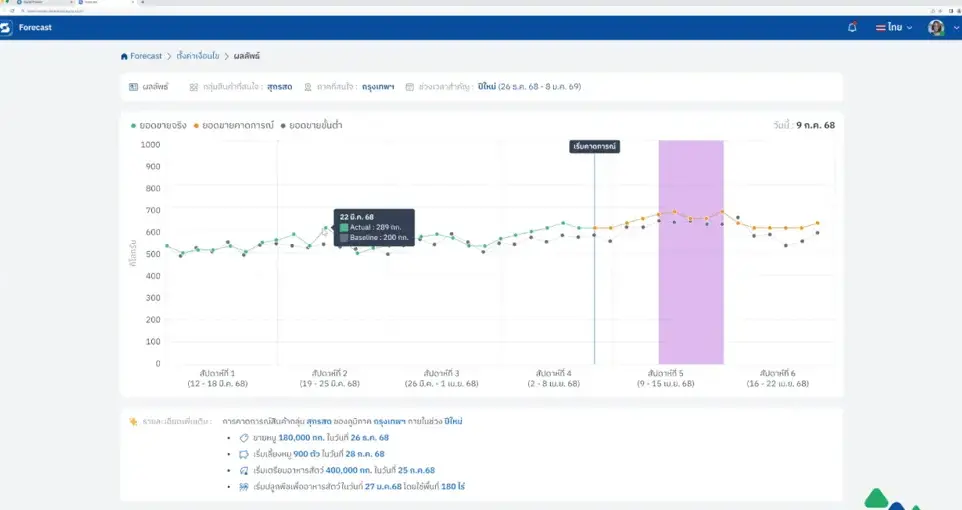
- Forecast future product demand using sales data and relevant factors. •Analyze trends from historical data, prices, seasonality, holidays, and market factors.
- Display comparison data between forecast figures and actual sales.
- Support order tracking through digital systems.
- Notify when customer ordering patterns change significantly.
- Support customer segmentation and marketing activity planning by area.
- Provide data for planning raw material procurement, production, and product.
Responsible Use Guidelines
- Forecast results are used as supportive data for planning; the responsible person remains the final decision-maker.
- Data used must be verified for quality, completeness, and timeliness.
- Model accuracy should be monitored and updated when market behavior changes.
- Notifications to customers or sales staff must not cause discrimination or use data beyond the stated purpose.
- Data access rights and security measures should be established appropriately.
