Human Rights

Target

Performance


The agro-industrial and food business is connected to a large number of people across the entire value chain, from workers in production processes, farmers, and supply-chain partners to communities and end consumers. As a result, it can generate both positive and negative impacts on labor, including employment, labor practices, and working conditions. These impacts may occur within the company’s own operations as well as across its complex supply chain. The sector also plays a direct role in influencing community quality of life and society’s food security.
At the same time, technological advancement, increasing threats, widening inequality gaps, as well as intensifying climate change and environmental crises, may further affect work, well-being, food security, and access to natural resources among stakeholders across the value chain, all of which are fundamental rights essential to sustaining life for both present and future generations.
As a leader in fully integrated agro-industrial and food business , the Company recognizes its responsibility to respect and promote fundamental rights through decent employment, capacity development, and the promotion of well-being and fairness. This commitment includes developing products that prioritize nutrition as well as health and well-being, supporting equitable access to food, while protecting ecosystems and using resources responsibly. In parallel, the Company collaborates with business partners and relevant stakeholders across sectors to strengthen livelihood as well as job and income security, enhance resilience and adaptability to change, and maintain environmental balance, thereby contributing to inclusive growth and a sustainable agricultural and food system.
Management Approach
CPF recognizes that all individuals possess equal inherent value and dignity. The Company is therefore committed to conducting its business with respect for human rights across all stakeholder groups throughout its value chain, as stipulated in its Code of Conduct and related corporate policies. In addition, the Company strictly complies with all applicable laws and regulations.
CPF Human Rights Management Framework
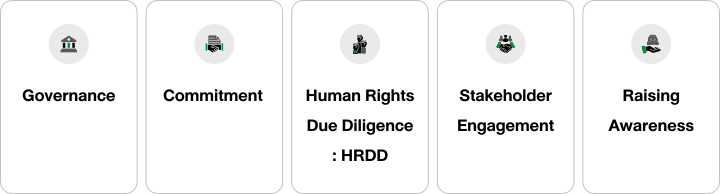
Governance
The Company requires all business units to manage human rights risks that may arise from its operations, including those within their respective areas of responsibility across the value chain. A Human Rights Working Group comprising representatives from Human Resources, Risk Management, Feed Raw Material Procurement, Corporate Procurement, Sustainability Management, and Sustainability Engineering is responsible for driving implementation across the organization and its supply chain. The Working Group reports on performance and progress to the Corporate Governance and Sustainability Development Committee, which provides oversight to ensure that human rights management is effective and aligned with internationally recognized human rights principles.
Commitment
The Company has clearly demonstrated its commitment through its Human Rights Policy. This policy integrates the United Nations’ Guiding Principles on Business and Human Rights (UNGPs) and aligns with internationally recognized standards, including the Universal Declaration of Human Rights (UDHR) and the International Labour Organization (ILO) Declaration on Fundamental Principles and Rights at Work. Human rights principles have also been embedded into the Company’s global policies and operational processes through a range of specific policies, including Employment and Labour Management Policy, Non-Discrimination and Anti-Harassment Policy, Diversity and Inclusion Policy, Quality Policy, Sustainable Sourcing Policy and Supplier Guideline Principle. This is to ensure that all stakeholder groups are treated equally and fairly, and free from discrimination and all forms of harassment.
Human Rights Due Diligence: HRDD
Risk and Impact Assessment

Integration and Implementation of Measures

Monitoring and Reporting

Grievance Mechanism and Remediation Process

Since 2016, the Company has conducted a Human Rights Due Diligence (HRDD) process every three years, covering 17 countries where the Company has business operations. The assessment covers all operational areas across the value chain, including subsidiaries and joint ventures.. The assessment covers both the Company’s employees and rights holders across its supply chain, including employees, business partners, contractors, farmers, customers and communities. Particular attention is given to vulnerable groups, such as women, pregnant women, children, LGBTQI+ individuals, the elderly, persons with disabilities, migrant workers, third-party employees, and ethnic groups. The Company’s Salient Human Rights Risk Issues comprise the followings:
Own Operations (Including subsidiaries and joint ventures over which CPF has management control)
- Employee Working Condition
- Employee Occupational Health and Safety
- Supplier and Contractor Occupational Health and Safety
Tier 1 Suppliers and Contractors
- Occupational Health and Safety
- Working Condition and Labor Practices
Furthermore, at all operational sites where salient human rights issues are identified, the Company has implemented mitigation measures and remediation processes achieving 100% coverage.
In addition, the Company conducts Human Rights Impact Assessments (HRIA) on its salient Human Rights risk issues. This in-depth assessment across its operations and supply chain enables the Company to develop and strengthen its processes and measures to effectively prevent, manage, and address human rights risks, while generating positive impacts for employees, business partners, communities, and other relevant stakeholders. Furthermore, the Company monitors, reviews, and publicly discloses its performance on an annual basis.
In 2024, CPF collaborated with a leading consulting firm to conduct a Human Rights Impact Assessment (HRIA) covering employees of the Company’s supplier groups. The assessment aimed to ensure that working conditions and labor management practices were aligned with internationally recognized human rights principles. Employee perceptions of their employers’ human rights performance were gathered through surveys focusing on key employment and labour management issues.
The survey identified the three most significant human rights issues perceived or experienced by employees as occupational health and safety (9.45%), employment conditions (7.42%), and discrimination (4.42%). These issues were assessed as having a medium level of severity based on the human rights impact assessment methodology.
CPF consolidated the feedback and recommendations from the assessment to strengthen labor management practices and enhance the capabilities of its supplier companies. To promote legal compliance and fair treatment of workers, the Company encouraged its supplier companies to establish accessible and well-communicated grievance mechanisms, while raising awareness of employees’ rights to express concerns and opinions freely. In addition, supplier companies were encouraged to adopt non-discrimination and anti-harassment policies and to ensure that reporting parties are protected from all forms of retaliation.
To ensure that its operations are aligned with internationally recognized principles, the Company has established a Whistleblowing Policy and provides multiple and accessible grievance channels. These include an online complaint form via the Company’s website, a hotline, fax, and a dedicated email address for whistleblowing. All grievance mechanisms are overseen by the Audit and Risk Management Committee.
For more details, please refer to:
Related Documents
Stakeholder Engagement
The Company recognizes the importance of stakeholder engagement and actively involves employees, business partners, and communities surrounding its operations in the process of identifying and assessing risks and impacts. This enables the Company to develop appropriate, effective, and context-specific measures to prevent, address, mitigate and remediate such impacts.
Raising Awareness
To foster a culture of respect for human rights across the organization and throughout its supply chain, the Company communicates its Human Rights Policy and related policies to employees, workers, contractors, and business partners through multiple channels, including the intranet, email, posters, and engagement activities.
All employees and workers are required to complete annual training on the CPF Code of Conduct and other mandatory foundational courses, which cover the Company's business principles, core values, business ethics, integrity, and other fundamental topics. The training also includes policies and practical guidelines on respecting the rights of all stakeholder groups, including the prevention of discrimination, harassment, and other inappropriate workplace conduct.
The Company also provides training for employees on the Thai Labour Standard (TLS 8001-2020): Labour Corporate Social Responsibility Requirements, delivered by qualified experts, as well as other programs in line with customer requirements, such as SMETA 7.0 Standards. These initiatives contribute to strengthening organizational standards in labour practices, occupational health and safety, environmental management, business ethics, as well as social responsibility across the supply chain.
Performance and Key Initiatives
The Company places importance on advancing the management of salient human rights issues across its own operations and supply chain. Its efforts focus on three key areas: promoting diversity, equity and inclusion (DEI), strengthening transparent and fair worker voice and grievance mechanisms; and respecting freedom of association and collective bargaining. These efforts aim to create positive impacts for communities, particularly vulnerable groups, through stakeholder engagement, while reducing social inequality, and fostering sustainable economic opportunities.



Diversity, Equity & Inclusion: DEI
The Company believes that diversity in perspectives, skills, and experiences among its employees is a key driver of sustainable success. The Company is committed to providing equal opportunities and ensuring fair and equitable treatment for all employees. It strives to foster a safe and inclusive working environment that prevents all forms of harassment and abuses, and free from discrimination, and grounded in respect for individual differences regardless of race, nationality, gender, age, or physical characteristics. The Company has set a 2030 target to achieve an equal representation of female and male employees across its workforce.

Migrant Worker Management
The Company manages its migrant workers in strict accordance with Ethical Recruitment program under the Employer Pays Principle, in order to protect the rights and dignity of workers throughout the recruitment and employment process. The Company is responsible for all recruitment-related expenses from the country of origin, including recruitment service fees, passport fees, medical check-up costs , visa fees, and work permit fees, as well as travel and meal expenses, without charging or deducting any such costs from migrant workers.
The Company continuously conducts "Dormitory Meet-and-Greets" sessions throughout the year, providing opportunities to engage directly with migrant workers in their accommodation. This initiative enables the Company to listen to their feedback, suggestions, and expectations regarding living conditions and working environments. Insights obtained through these engagements are used to enhance measures that improve their quality of life in a manner that is appropriate and responsive to the specific needs of workers in each location.
In 2025, a total of 13 dormitory visits were conducted across Company’s operational facilities in multiple provinces nationwide. These informal and friendly discussions helped build trust between workers and civil society representatives, encouraging workers to feel more confident in expressing their views and concerns. It also enables the Company to gain insights that reflect workers’ ground-level perspectives , which are valuable for improving measures aimed at enhancing the well-being of migrant workers.
Employment of Persons with Disabilities
The Company places importance on promoting equal employment and access to career opportunities for persons with disabilities, in full compliance with legal requirements, and without discrimination. In particular, the Company has continuously implemented measures in accordance with Sections 33 and 35 of the Persons with Disabilities Empowerment Act since 2017.
-
On-site employment: Providing persons with disabilities with equal access to suitable job opportunities within the Company, such as administrative, accounting, and support functions in factories and farms.
-
Community or public benefit employment: Promoting the social participation of persons with disabilities in public service activities, including placement in institutions such as schools under the Office of the Basic Education Commission (OBEC), Border Patrol Police schools, government agencies, temples, Sub-district Health Promoting Hospitals, as well as the Company’s community development projects.
-
Support for self-employment: Facilitating access to livelihood opportunities by allocating space within Company’s premises for persons with disabilities to sell their products.
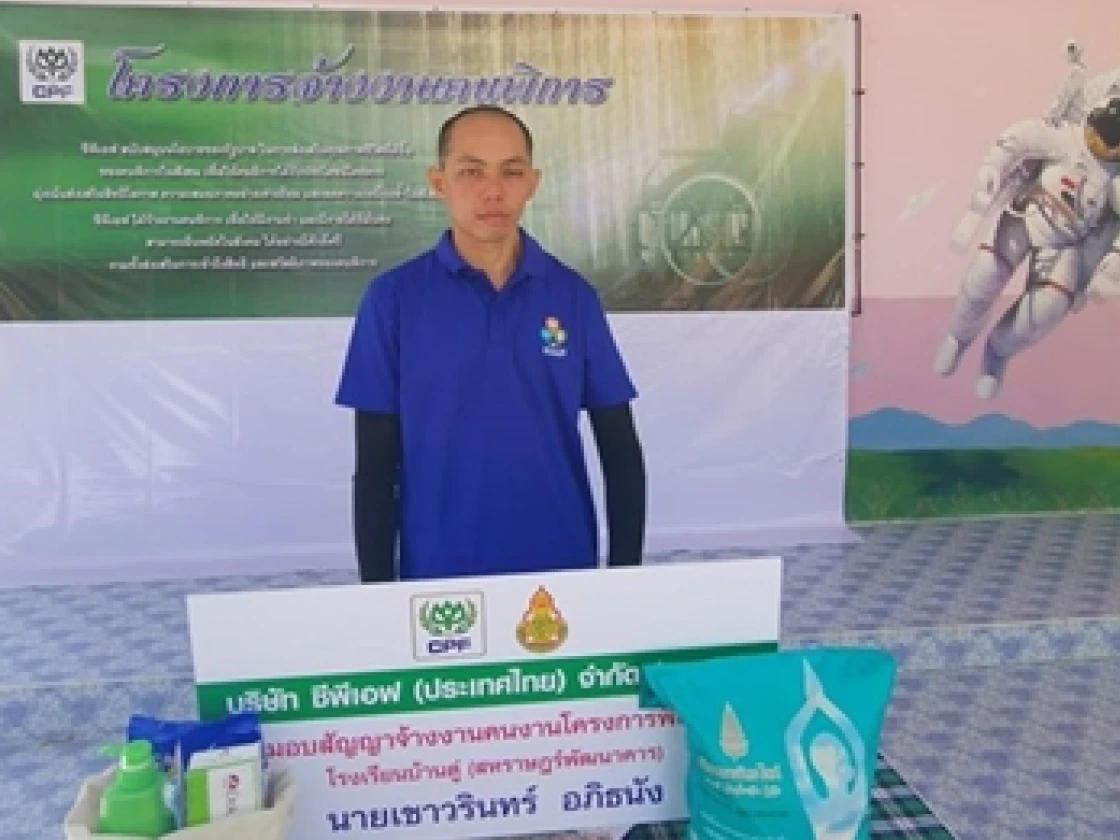
To ensure that persons with disabilities have a good quality of life and receive appropriate support, the Company has implemented capacity-building programmes to enable sustainable employment and promote self-reliance. These include training on essential knowledge such as disability-related rights and benefits, social security, and workplace safety as well as vocational skills development, for example layer chicken farming. In addition, the Company conducts regular follow-up visits to monitor and assess living conditions.
Creating Career Opportunities for Youth
To support skills development and reduce youth unemployment, the Company has implemented internship and cooperative education programs providing students with opportunities to gain hands-on experience across its fully integrated food production processes . In 2025, a total of 233 students participated in these programs spanning multiple functions such as Human Resources, Corporate Engineering, Aquaculture, Swine, and Broiler businesses.
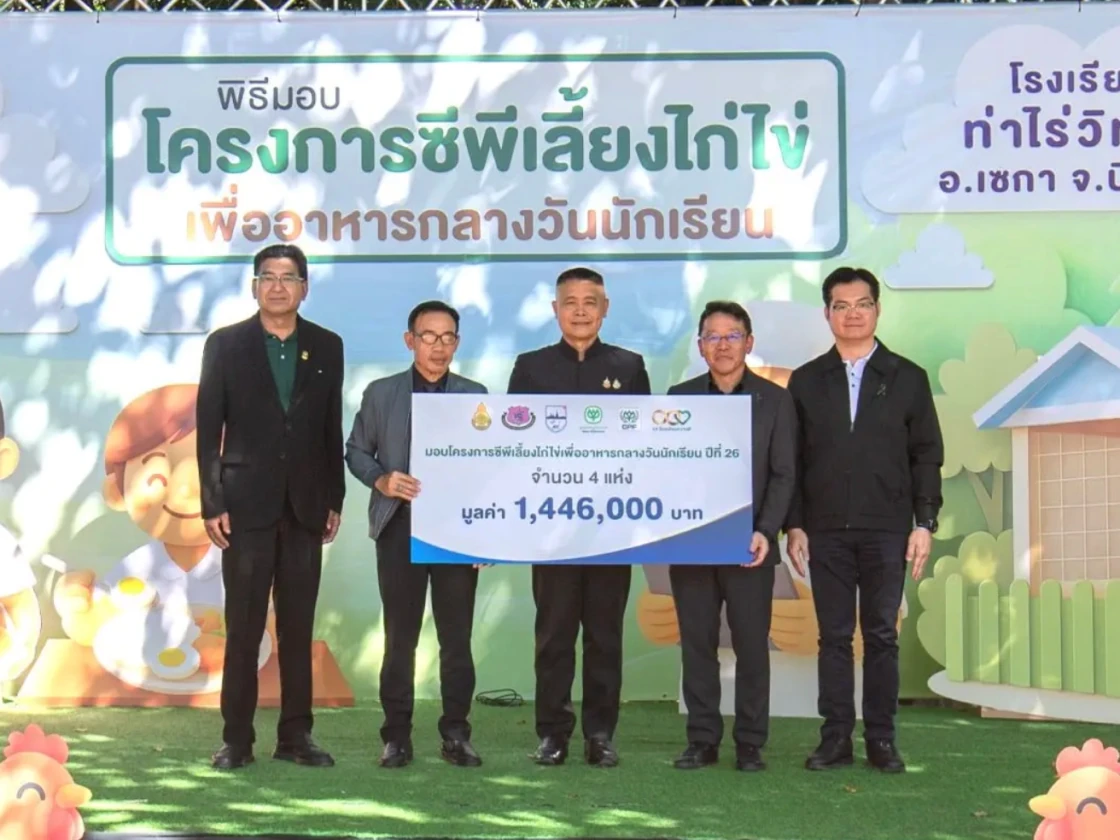
In addition, CPF has implemented the 'Layer Chicken for School Lunch' project, transferring knowledge in poultry farming, farm management, and marketing, as well as new skills, to local schools. The program incorporates advanced technologies, including Internet of Things (IoT) and Artificial Intelligence (AI), to enhance students’ capabilities as “Smart Farmers”. Students are able to use IoT systems to manage layer farming while developing future-ready skills.
Furthermore, the Company promotes the employment of new graduates in fields aligned with its business needs. In 2025, more than 1,000 new graduates were recruited, contributing to the development of a new generation of talents for the food industry, enhance employability, and contributing to reduce youth unemployment.
Transparent and Fair Worker Voice Mechanisms
The Company has partnered with the Labour Protection Network Foundation (LPN), an independent and trusted external organization specializing in labor rights, to establish an independent grievance mechanism through the “Labor Voices Hotline by LPN” since 2017. This mechanism serves as an important channel for systematically gathering and addressing workers’ feedbacks and concerns.
To ensure equitable and inclusive access, the service is available in multiple languages, including Thai, Myanmar, and Cambodian. The platform enables workers to freely and confidently express opinions, seek advice, or raise grievances.

Communication Poster: "Labor Voices Hotline by LPN" Employee Feedback Channel

Thai/English language poster

Myanmar/Thai language poster

Cambodian/Thai language poster
The grievance and whistleblowing process is outlined below:
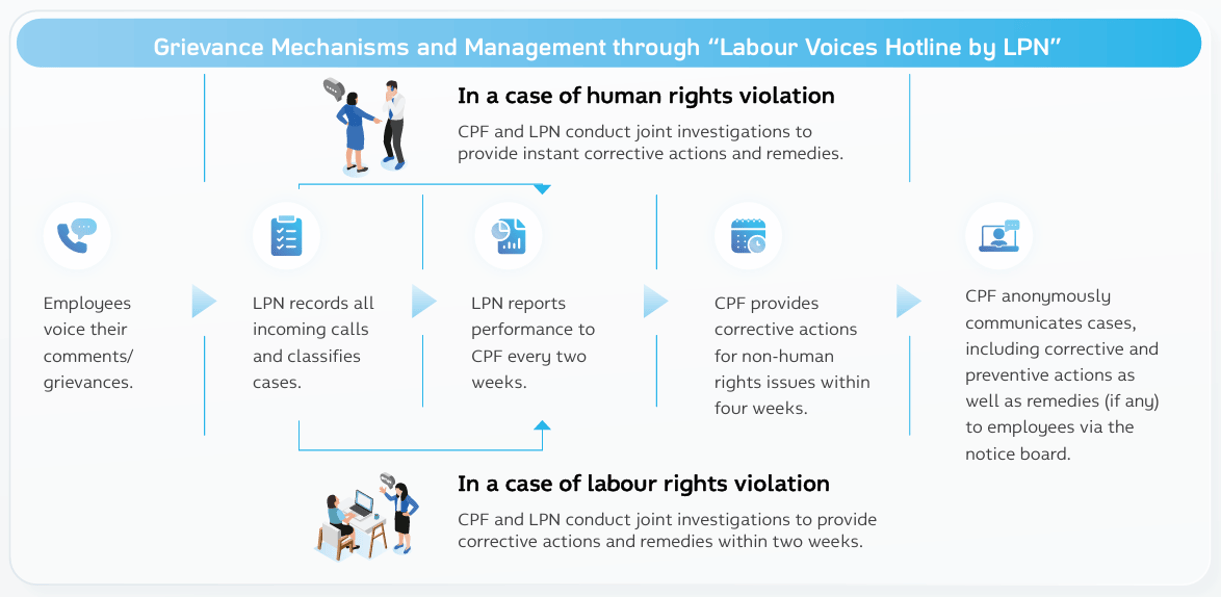
All grievances received are recorded and managed by LPN, which coordinates with the Company’s relevant functions to verify facts and implement appropriate corrective actions and remedies. The Company places strong emphasis on maintaining strict confidentiality of complainants to safeguard employee rights and safety throughout the process. In 2025, the Company received a total of five cases through the “Labour Voices Hotline by LPN,” covering issues related to living conditions, facility management, and compensation systems. All cases were thoroughly investigated and addressed in accordance with established protocols. In addition, internal control measures were improved to prevent recurrence and to further enhance a safe, fair, and respectful working environment for all employees.
Furthermore, under this collaborative framework of cooperation, LPN has continuously provided training to CPF employees to raise awareness among both Thai and migrant workers of their rights and responsibilities, and to enhance understanding of how human rights principles can be applied in daily work practices.
Freedom of Association and Collective Bargaining
The Company shall respect the employees’ right to freedom of association and to form or join groups in compliance with applicable laws, including participation in collective bargaining processes in accordance with legal procedures.
For its Thailand operations, the Company promotes employee participation through Welfare Committees in Workplace. which serves as a representative body for employees at all levels, responsible for gathering feedback, opinions, and expectations, which are then presented to and discussed with management. This dialogue aims to continuously improve welfare and working conditions, ensuring that all employees benefit from enhanced quality of life. Furthermore, this mechanism bridges the gap between employees and management, fostering a workplace culture of "Listening and Mutual Respect".
For the Company's international operations, employee participation mechanisms are promoted in accordance with the applicable legal and labour requirements of each country where the Company operates.
The election of the Welfare Committee is conducted in a transparent and fair manner. The Company sets the number of committee members above the legal minimum of five, with a maximum of 17 members, to ensure appropriate representation in line with the size of each operating site. Additionally, the Company promotes the inclusion of vulnerable groups by requiring that the Welfare Committee reflects diversity across various dimensions such as gender, nationality, religion, and disability. Where election results do not adequately represent such vulnerable groups, the Company establishes a Welfare Sub-Committee to ensure that the voices and needs of every employee group are thoroughly heard.


In 2025, over
of the workforce benefited from enhancements in welfare and working conditions implemented based on recommendations from the Welfare Committee across Thailand. Currently, the Company currently has a total of 177 Welfare Committees, comprising 973 members, exceeding legal requirements by 88 members.
This structure and the operational approach of the Welfare Committee effectively promote meaningful participation and establishes a two-way communication mechanism within the organization, which is essential for advancing equitable and sustainable improvements in the quality of life of all employees.
By actively listening to employee feedback, the Company has enhanced employee welfare beyond legal requirements to better address employees' needs. Key initiatives include the establishment of a provident fund, the enhancement of annual health check-up programs tailored to individual risk factors, the provision of interest-free educational loans for employees’ children, and the promotion of preventive healthcare through sports club activities, designated recreational and fitness facilities , health education programs covering both physical and mental well-being, as well as appropriate vaccination programs, among others.
