Sustainability in Action
El Niño-La Niña Flood and Drought Response Plan
The livestock business in Thailand prepares for potential disasters by assessing flood and drought risks across all major operating areas—such as animal feed mills, livestock farms, and processing plants—as well as the farms of key business partners.
To strengthen preparedness, the Company uses historical flood and drought data to develop both short-term and long-term response plans for high risk areas. These plans include comprehensive measures covering the full supply chain, from inbound logistics and transportation routes for raw materials, to on-site operations, and outbound product delivery. During flood events, a dedicated task force is activated to closely monitor the situation and coordinate timely actions to reduce impacts and support effective response.
For areas at risk of droughts, the Company has put in place proactive measures to reduce water use and ensure reliable water supply, including:
- Improving Water Efficiency: Increasing water-use efficiency at farms and factories in line with the 3Rs (Reduce, Recycle, and Recover) principles.
- Managing Water Sources: Building additional surface-water ponds to collect and store rainwater, and drilling groundwater wells as a backup source.
- Adjusting Internal Farm Systems: Reducing water use during facility preparation and adjusting evaporator operating times to match suitable weather conditions.
- Reducing Water Loss: Increasing the frequency of leak inspections to quickly identify and fix leaks, minimizing unnecessary water loss.
In 2025, the Company’s Thailand operations installed water production systems at 12 locations—including poultry farms, swine farms, and food factories—that use both surface water and groundwater to strengthen water security. As a result, the operations reduced reliance on purchased water and saved approximately 39 million baht in water procurement costs.
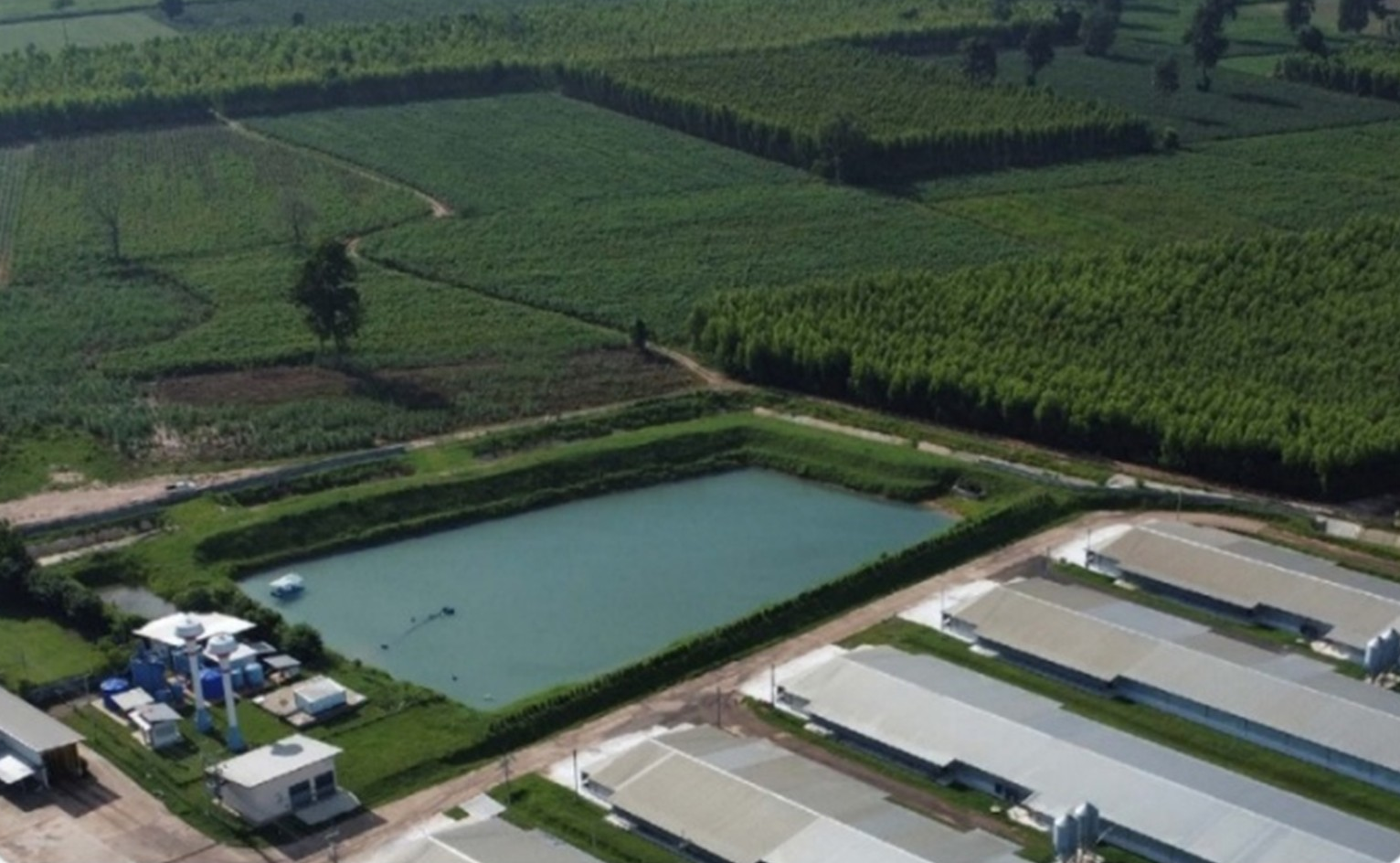
Reservoir at a broiler farm in Nakhon Ratchasima Province
