Quality and Food Safety Management
Targets
Performance
Access to sufficient, safe, and nutritious food is a fundamental human right and a critical driver of long-term health and well-being. Foodborne hazards can cause over 200 diseases and exacerbate malnutrition, particularly among vulnerable populations such as children, the elderly, and those with underlying health conditions.
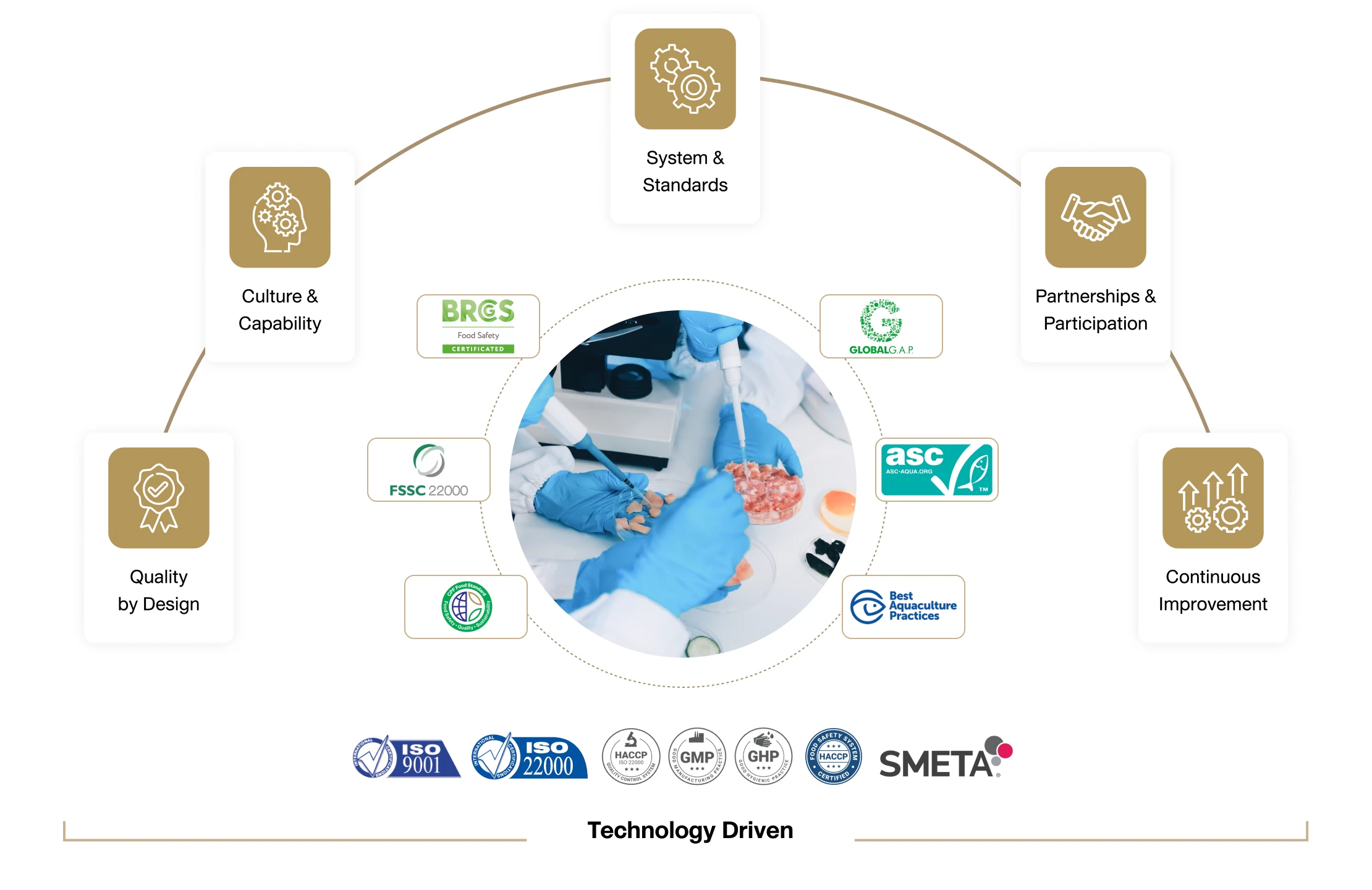
CPF is committed to managing quality and food safety under our Global CPF Quality Policy and the "Quality by Design" concept. This approach integrates risk assessment and quality management throughout the product life cycle—from raw material sourcing and product development to manufacturing and final delivery. We achieve this by fostering a food safety culture, enhancing human capital capabilities, and adhering to international standards and management systems. Through multi-stakeholder collaboration, the adoption of advanced technologies, and a commitment to continuous improvement, we ensure that our food and beverage products meet the highest safety standards and consistent quality. This enables us to fulfill consumer expectations while actively contributing to the development of sustainable food systems.
Culture and Capability
People are the foundation of food quality and safety. Accordingly, the Company focuses on building a strong culture and strengthening employees’ skills at every level. This helps ensure consistent ways of working across the organization and effective use of systems and technology. To support this, CPF created the CPF Food Safety and Quality Culture (FSQC) Manual.
The FSQC framework seeks to strengthen the organization’s food quality and safety culture by communicating core principles and practices to all employees and workers. It also promotes active employee involvement through open dialogue, feedback channels, and opportunities to recommend improvements. This approach enables continuous improvement and reinforces food quality and safety throughout the Company.
Empowering People and Building a Quality Culture: Improving Food Safety Through Small Group Activities
Providing high-quality products to customers and consumers is a shared responsibility across all relevant teams. To strengthen our food quality and safety culture, the Company uses Small Group Activities to increase employee involvement and drive continuous improvement. This approach encourages bottom-up participation, especially from frontline employees. Working together, small groups identify the root causes of problems, analyze issues, and develop practical, systematic solutions.
Through this initiative, employees are supported to go beyond simply completing tasks and instead help create value for the organization. Small Group Activities also encourage younger employees to think ahead, take initiative, and develop innovative—but appropriate—ways of working. As a result, the Company can deliver quality more effectively and continuously improve food safety standards for customers and consumers.

Human Capital Development
The Company continuously builds employees’ knowledge and skills in quality and food safety at every level. This starts with orientation and continues through multiple learning methods, including the corporate e-learning platform, classroom and workshop training, project-based learning, on-the-job training (OJT), and coaching and mentoring from experts.


All Employees
The Company has included “Quality” as one of the four main pillars of the CPF Code of Conduct. As part of the governance framework, the Code of Conduct is a mandatory course that all employees must complete every year through the corporate e-Learning platform.’
The 4 Core Pillars of ‘Quality’ in the Code of Conduct Mandatory for all employees to uphold and complete through annual training


Quality and Food Safety Professionals
Expertise Development encompasses structured capability building in Raw Materials, Hygienic Design, Quality Assurance by Design, and Sensory Evaluation. The Company further strengthens organizational capacity by developing these specialists into certified Internal Instructors, ensuring systematic knowledge transfer and continuous competency development among relevant employees.
CPF x KMITL x EHEDG Thailand: Building Skills with EHEDG European Standards
Since 2024, CPF has partnered with the Faculty of Engineering at King Mongkut’s Institute of Technology Ladkrabang (KMITL) and EHEDG Thailand to provide EHEDG Hygienic Design training for employees in the Quality Assurance and Engineering teams. EHEDG is widely recognized as a leading global standard for hygienic design in the food industry. Employees who complete the program act as a “Knowledge Hub,” sharing best practices and expertise with other departments across the organization. This initiative strengthens the Food Safety Management System and helps build a preventive food safety culture throughout the entire production value chain.
Quality and Food Safety Professionals are provided with core training in quality control and food safety, including Good Manufacturing Practice (GMP), Hazard Analysis and Critical Control Points (HACCP), Personal Hygiene, Pest Control, Food Fraud, and Food Defense. In 2025, 100% of Quality and Food Safety Professionals in the Company's Thailand and Vietnam operations completed the core training in quality control and food safety.
Systems & Standards
Global Quality and Food Safety Management Systems across the Value Chain
The Company implements a management system aligned with international standards under the CPF Quality Policy. This policy serves as the governance framework for overseeing and controlling operations across the entire value chain, encompassing the Feed-Farm-Food business model. In Thailand, this covers the broiler, duck, and pork business units, while in Vietnam, it includes the CP Binh Phuoc fully integrated broiler complex. The Global Standard System Center serves as the primary entity driving management excellence under the CPF Food Standard.
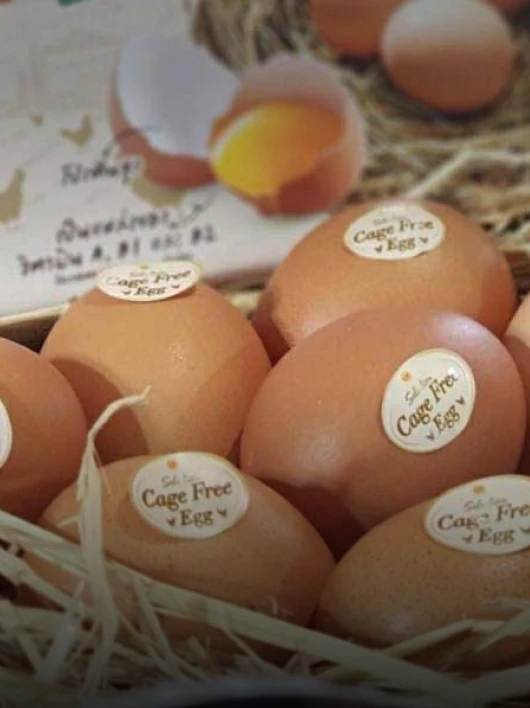
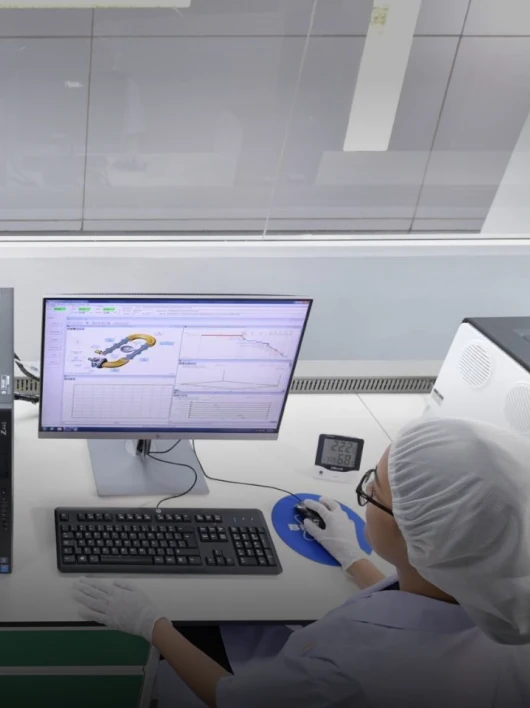

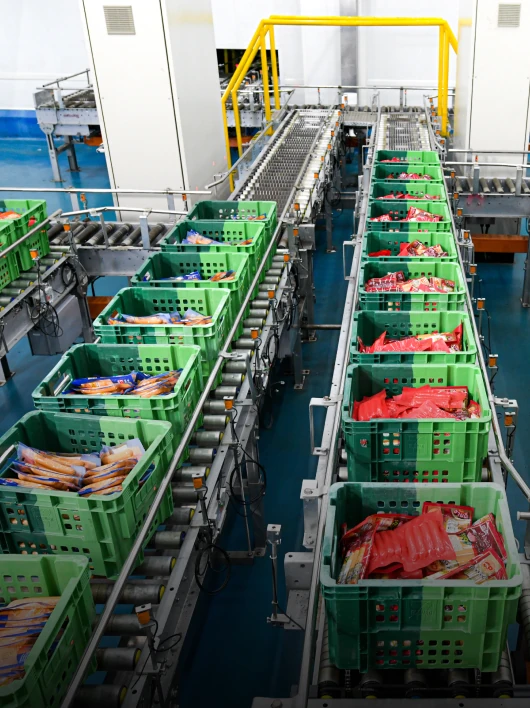
CPF Food Standard
Driven by a commitment to delivering food products that consistently meet global standards for consumers, the Company developed the CPF Food Standard in 2018. This management framework has been continuously implemented and scaled across the Company’s operations in Thailand and international markets, positioning the Company as a pioneer in ASEAN in establishing an integrated, company-wide food production standard.
The CPF Food Standard integrates multiple international standards, including Codex, ISO 9001, ISO 22000, BRCGS, and LR Farm First, as well as relevant regulations. The standard covers quality, food safety, and sustainability from upstream raw materials to downstream processes and enables traceability throughout the entire production chain, with support from the British Standards Institution (BSI).
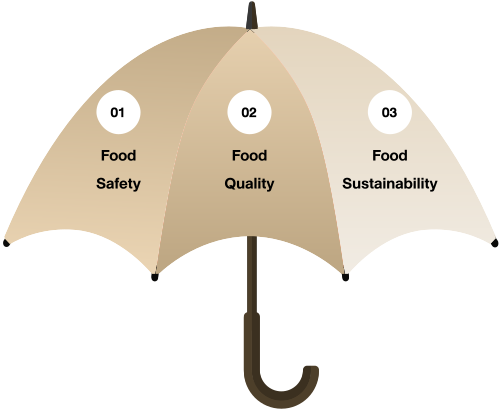
Food Safety
- Food Safety Hazards
- Hygienic Equipment & Infrastructure
- Food Fraud & Food Defense
Food Quality
- Digital Traceability Systems
- Blockchain-Enabled Transparency & Data Integrity
Food Sustainability
- Product Carbon Footprint & Sustainability
- Food Loss and Waste Reduction
- Animal Welfare Excellence
Audit
Internal auditing serves as a vital mechanism for the systematic risk management of quality and food safety across the value chain. It ensures operational efficiency and strict regulatory compliance with key standards. The Company conducts internal audits at least once a year, or more frequently based on risk-based assessments. Internal auditors are appointed by plant management and must maintain independence from the audited units. Furthermore, they are required to complete specialized training, such as Internal Audit or Lead Assessor courses, with mandatory refresher training at least every three years to maintain technical expertise in organizational standards.
The Company’s audit teams are trained through the "SMART IA (Internal Audit)" project. This initiative enhances the ability of auditors to drive in-depth organizational improvement through audit activities, ensuring a high-performing team aligned with the international ISO 19011 guidelines. These teams are capable of auditing systems for quality, food safety, and sustainable products, among other standards. This rigorous oversight elevates the quality and safety of products under the CPF Food Standard, covering the entire CPF Value Chain—from feed mills, parent stock farms, and hatcheries to livestock farms, slaughterhouses, and food processing plants.
Findings from internal audits are systematically utilized to identify and assess risks that could impact business continuity. These insights allow for the implementation of robust control measures throughout the supply chain. To mitigate the risk of single-source dependency, the Company maintains a dual- and multi-sourcing strategy for critical raw materials. Furthermore, the CPF Food Standard mandates comprehensive emergency preparedness and response planning to address potential disruptions to the production process. This includes agile production adjustments and the strategic prioritization of raw materials and products. We ensure the ongoing effectiveness of these measures through continuous monitoring and a structured Management Review process, ensuring that risk management is systematic and integrated across all business units.
In addition to internal oversight, the Company undergoes third-party audits by customers and independent certification bodies. In 2025, our commitment to global excellence was demonstrated by achieving international certifications for quality and food safety across the entire production chain as follows:
Feed Business
| GMP, GHPs, HACCP | ISO 9001 | ISO 220000 | ISO 17025 | Global GAP | BAP, ASC | AI Compartmenti | FAMI QSii | SMETA | CPF Food Standard | |
|---|---|---|---|---|---|---|---|---|---|---|
| Thailand | ||||||||||
| Vietnam | ||||||||||
| China | ||||||||||
| Russia | ||||||||||
| Philippines | ||||||||||
| Cambodia | ||||||||||
| Malaysia | ||||||||||
| India | ||||||||||
| Laos |
Farm-Processing Business
| GAP, GMP, GHPs, HACCP | ISO 9001 | AI Compartment | BAP, ASC | BRCGS Food Safety | SMETA | Farm F1rst | Global S.L.P | CPF Food Standard | |
|---|---|---|---|---|---|---|---|---|---|
| Thailand | |||||||||
| Vietnam | |||||||||
| China | |||||||||
| Russia |
Food Business
| GMP, GHP, HACCPiii | ISO 9001 | ISO 220000 | FSSC 220000 | BRCGS Food Safety | SMETA | BAP, ASC | IFS | CPF Food Standard | |
|---|---|---|---|---|---|---|---|---|---|
| Thailand | |||||||||
| Vietnam | |||||||||
| China | |||||||||
| Philippines | |||||||||
| Cambodia | |||||||||
| Malaysia | |||||||||
| United Kingdom | |||||||||
| India | |||||||||
| Belgium |
Remarks :
i AI Compartment (Avian Influenza Compartment) Standard by the Department of Livestock Development.
ii FAMI QS (Feed Additives and Pre-Mixtures Quality System).
iii Food production plants including food processing plants for semi-cooked and cooked food, and ready-to-eat food factories.
CPF Food Laboratory
The Company is continually improving its product testing and certification capabilities. In Thailand, we operate nine in-house laboratories that are accredited to the international ISO/IEC 17025 standard. Our testing covers four main areas:
Microbiological Analysis

Chemical Analysis

Physical and Sensory Evaluation

Instrument Calibration

Maintaining in-house laboratories enables the Company to exercise quality control at the point of origin, effectively mitigating contamination risks. This internal capacity accelerates the decision-making process and enhances the efficiency of end-to-end traceability across the value chain.
Supply Chain Collaboration
The Company focuses on building the capabilities of its business partners to help maintain quality and food safety across the entire supply chain. All suppliers and contractors must follow our Sustainable Sourcing Policy, which covers quality, people, environment, and governance requirements. Partners working on our sites must also comply with the Company’s food safety rules. To support this, we regularly communicate expectations and provide targeted training on our Supplier Standards.
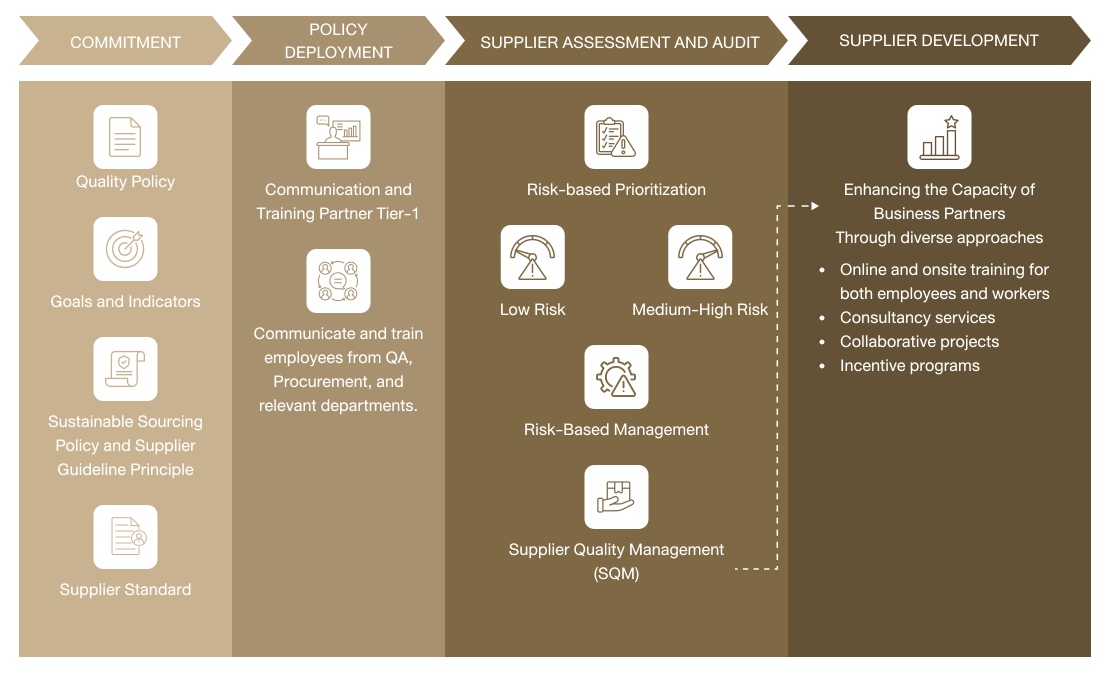
The Company is committed to strengthening its business partners and key raw material farmers through proactive engagement. We start by prioritizing our suppliers based on risk, so we can manage and support them appropriately and effectively.
We continuously build partners’ knowledge and capabilities through annual training, knowledge-sharing sessions, in-depth consulting, collaborative problem-solving projects, and incentive programs. In 2025, we trained 100 business partners to improve their understanding of process optimization and to encourage strategic collaboration, helping drive practical actions to raise quality and food safety standards.
Technological Transformation
The Company continues to strengthen its quality and food safety management by adopting innovative solutions and advanced technologies across production and inspection. By shifting from manual checks to automated inspection systems, we reduce operational risks, improve the efficiency of quality control, and enhance consumer confidence in food safety.
Digital Traceability for Product Quality and Food Safety
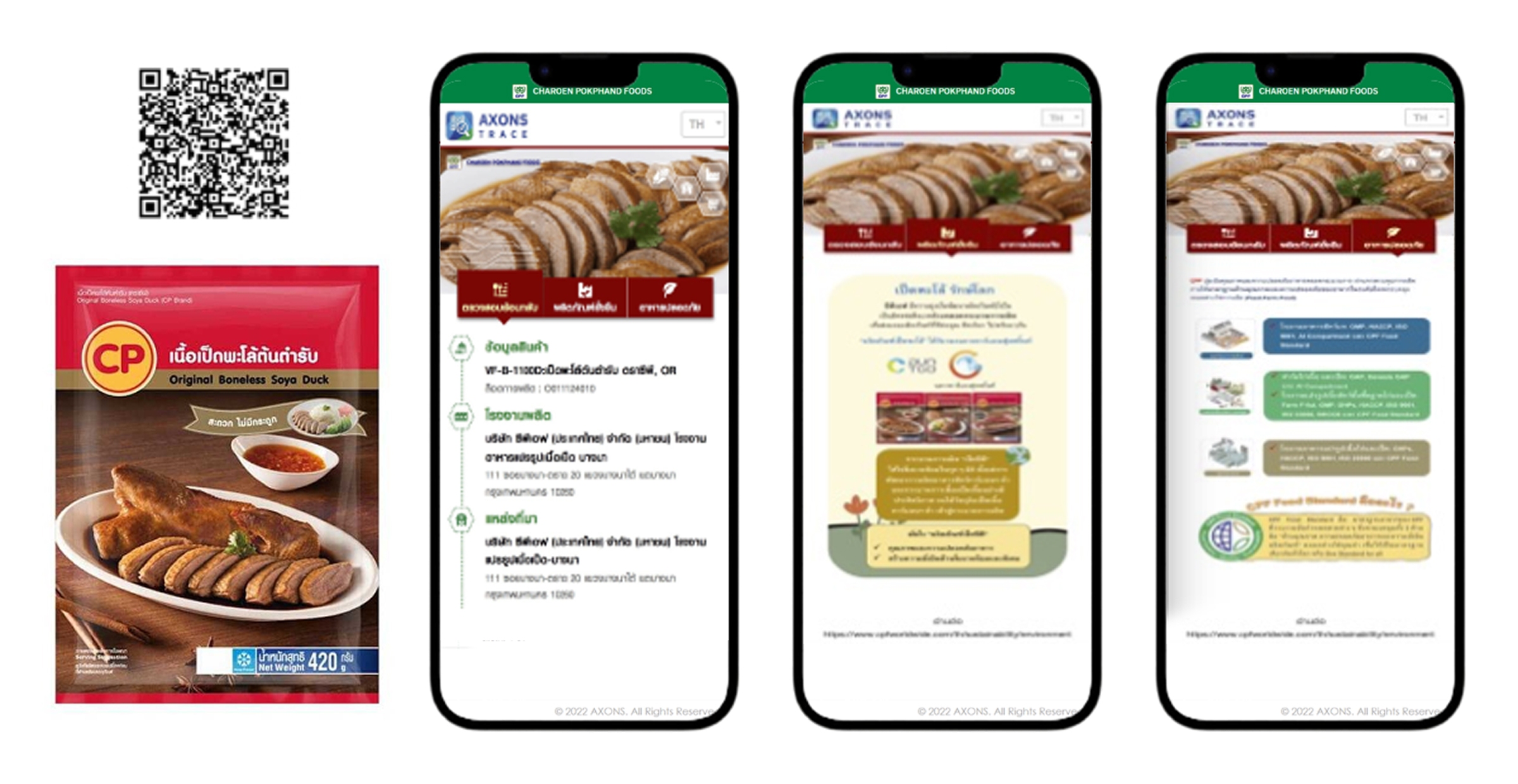
The Company introduced a digital product traceability system across its Thailand operations in 2017 to strengthen consumer confidence. Using blockchain technology, the system provides high levels of data transparency and integrity. As of 2025, digital traceability covers fresh chicken, fresh pork, fresh shrimp, fresh eggs, fresh duck, cooked duck, and processed egg products.
Multi-stakeholder Collaboration and Engagement
The Company recognizes its responsibility to help strengthen the food industry supply chain. We actively support this effort by participating in national organizations and industry associations, and by collaborating with academic institutions and partners on research and development. These activities are intended to advance quality standards, food safety, and sustainability across the industry.
In 2025, the Company represented the food and beverage industry group under the Federation of Thai Industries and participated in two Codex Alimentarius Committee meetings organized by the Food and Agriculture Organization of the United Nations (FAO) and the World Health Organization (WHO). These included the Codex Committee on Food Additives and the 55th Session of the Codex Committee on Food Hygiene. Through this participation, the Company contributed to the review and exchange of perspectives on international standards related to food additive use, science-based safety assessment, and food hygiene practices. These engagements support consumer health, promote fair trade, and help align national food quality and safety standards with international guidelines.
In addition, the Company is a member of the Thai Broiler Processing Exporters Association. We support the poultry industry with a strategic focus on export markets by providing insights into production and marketing, while working closely with the Thai government to address industry-wide challenges and constraints.
