Occupational Health and Safety

A robust occupational health and safety management system directly influences the health and well-being of our employees. Effective management that complies with legal requirements and international standards generates a positive impact on employee well-being. It promotes a safe working environment, reduces illness, injuries, and work-related chronic conditions, and prevents occupational accidents and fatalities among employees and stakeholders operating within our premises.
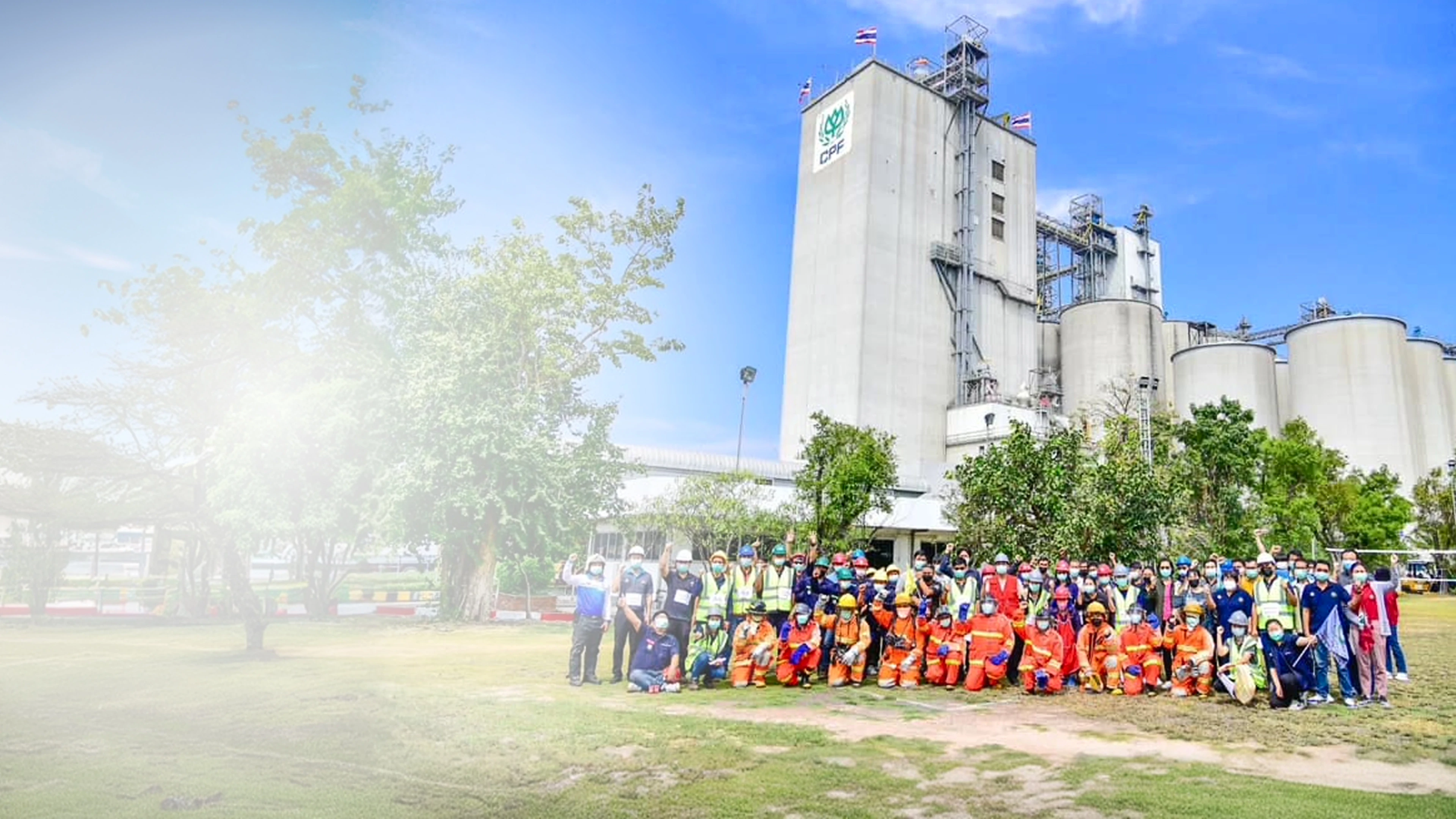
The Company actively promotes and supports employee health and workplace safety through annual health check-up programs, health care initiatives, sports activities, and recreational pursuits facilitated by 19 employee clubs. Workplace safety and occupational health are overseen by the Safety Committee, utilizing the CPF Safety, Health, Environment, and Energy Standard (CPF SHE&En Standard), which aligns with global frameworks such as the ISO 45001 Occupational Health and Safety Management System, implemented across all business units. Furthermore, the Company organizes activities to identify key risk factors contributing to workplace accidents and conducts comprehensive training to instill accident prevention awareness, ultimately cultivating a strong culture of workplace safety.
Management Approach
Establishment of Policies and Management Systems

Fostering Participatory Safety Management

Risk Management for Accident and Occupational Disease Reduction

Occupational Health and Safety Training and Communication

Occupational Safety and Health Management Standards
In a sustainable business, the Company recognizes the significance of safety in the workplace, employees, the environment, and resources. Therefore, in addition to providing knowledge and understanding of accident prevention and work-related injuries, the Company also promotes Safety, Health, Environment and Energy (SHE&En) behaviors and culture by involving executives—they represent as a good role model and displaying commitment to SHE&En management to strengthen the organization's SHE&En culture through various related activities. Employees at all levels also must participate and cooperate to develop and change the performance of SHE&En.
In addition, the Company has developed the CPF Safety, Health, Environment, and Energy Standard as a mechanism to manage CPF's SHE&En hazards and risks, which has an impact to sustainable business operations and stakeholders.
This standard has been applied to all CPF regulated entities, incorporating into business planning and implementation since the stage of strategy formulation, management structure, operational plans in departments, the measurement and monitoring of business performance, including having a process in place for communicating policies to external organizations. This is to encourage the participation of employees at all levels to operate in the same direction.
The requirements of this CPF SHE&En Standard have been verified and confirmed by independent verifiers that they are consistent with relevant international standards, namely: ISO14001:2015 ISO45001:2018 and ISO50001:2018. And to demonstrate the Company’s commitment to implementing standards to effectively manage hazards and risks, the Company has therefore arranged to assess and certify the operation of CPF SHE&En Standard at the unit level by an Independent Certification Body in accordance with international standards, which are widely accepted by stakeholders. The objectives are to build confidence among business partners and customers in conducting business responsibly for safety and occupational health of all employees and operators as well as caring for the environment and resources.
Furthermore, the Company mandates a review of these standards at least once a year to ensure alignment with the evolving organizational context and stakeholder interests. These standards serve as a mechanism for managing Safety, Health, Environment, and Energy (SHE&En) risks and are systematically applied at the operational level across all CPF-supervised units, encompassing both CPF employees and contractors.
At the operational level, an Occupational Safety, Health, and Environment Committee is established in accordance with legal requirements. Comprising both management and employee representatives, this committee is responsible for reviewing the unit's safety policies and action plans, convening at least once a month. Additionally, the committee actively gathers recommendations and feedback from employees to continuously improve risk and hazard control measures, ensuring they remain in full compliance with the unit's SHE&En Standard.
The effectiveness of applying the CPF SHE&En Standard in managing SHE&En hazards and risks can be measured by Safety, Health, Environment and Energy Key Performance Indicators (SHE&En KPIs). The data collection process is in line with the Global Reporting Initiative Standard (GRI Standard). All departments are required to report information through a computer system on a monthly basis. So that executives at the department levels, business levels, and the Company level as a whole can track information to be used in business management in accordance with the Company's policies and goals.
Planning
- Establishing the management structure to drive policies, strategies, and work plans in order to achieve set goals.
- Identifying, assessing and prioritizing risks as well as setting plans to always control and reduce risks to an acceptable level for all activities in all operating areas.
- Identifying and fully complying with relevant legal and other requirements.
- Setting and reviewing goals, indicators and plans that are consistent with and support the business plan in order to conduct annual operational effectiveness assessment.
- Enhancing employees’ and contractors’ abilities and awareness through training and activities promoting knowledge on occupational safety and health.
- Communicating and cultivating positive occupational safety and health within and outside the organization.

Operation
- Determining rules and regulations and controlling operations in accordance with the standard operating procedure both in normal and emergency situations.

Follow up, review and improvement
- Following up and assessing operational effectiveness by conducting internal inspections and external audits as well as incident fact finding in order to analyse facts to determine proactive preventive measures, as well as sharing lessons learned with relevant stakeholders.

Fostering Participatory Safety Management
The Company strongly advocates for stakeholder involvement in occupational health and safety management through the establishment of an Occupational Health, Safety, and Environment Committee. Comprising representatives from both management and employees, this committee is tasked with reviewing occupational health and safety policies and formulating strategies to prevent and mitigate accidents, hazards, illnesses, and other adverse incidents.
We actively propose initiatives to improve working conditions and the workplace environment to ensure the safety of employees, contractors, and external visitors utilizing our facilities. Furthermore, the Company promotes and supports various workplace safety activities, evaluates safety training programs, and monitors the progress of proposals submitted to management. The committee also provides an annual performance report detailing its achievements, identifying challenges and obstacles, and offering recommendations for continuous improvement.
Building a Safety Culture
It is of great challenge for CPF to expect every employee to be aware and to have a good attitude towards safety which would ultimately lead to safety behavior and culture. However, given CPF's high number of employees with diverse knowledge, education, social background, ethinicity and environment, it is crucial that we have a strategy to improve the safety culture of the organization to address changes.
At present, fostering of safety culture has been integrated into the CPF SHE&En Standards through the following initiatives:
- Building strong leadership among executives to help them understand their roles and serves as role models for safety issues;
- Motivating employees by giving rewards to stimulate their participations;
- Providing business unit executives, operational employees and contractors with opportunities to exchange related information, news, knowledge, good practices and activities such as safety talks and lesson-learned sharing sessions, from which the information will be collected and shared with the SHE&En Management Committee for annual reviews of strategies, goals and practices; and
In addition, Organizing Safety Week Exhibition, promoting safe behavior through the “Think before You Act” Project, the “Helping Friends” Project and the “Behavior-Based Safety Observation”, as well as monitoring progress, providing suggestions and creating positive motivation, etc.
Risk Management for the Reduction of Workplace Accidents and Occupational Illness
Work Safety
CPF has prepared the standard operating procedure (SOP) for high risk work as a precaution against hazards that may cause adverse effect to employees, contractors, communities and stakeholders, where high risk work includes:
Working in Confined Space

Heat-Related Works

Lifting Objects

Working at Height

Works that May Cause Fire

Working with Machines

Working in Water

Electrical Works

Excavation

Working in Cold Room

Lock-Out Tag-Out

In addition, prior to performing high risk work, installing and maintaining high risk machines and equipment and machines that are important to the operations, as well as completing tasks that require permit to work, it is necessary to:
- Conduct the Job Hazard Analysis and determine measures to control hazards which may occur, which must be carried out by personnel who have received trainings and are knowledgeable and skilled in line with the requirement stipulated in CPF SHE&En Standards;
- Monitor and observe risks during the work process; and
- Promulgate the policy and procedure in place for employees and contractors to stop other people's works, including being able to refuse to perform duties as appropriate without having any effect on performance appraisal, as well as report potential risks and hazards (Near Miss Report) when encountering incident or unsafe working condition.
In addition, CPF has set up safety regulations for employee shuttle and dormitory as well.

Incident Fact Finding Process for Work-Related Risks
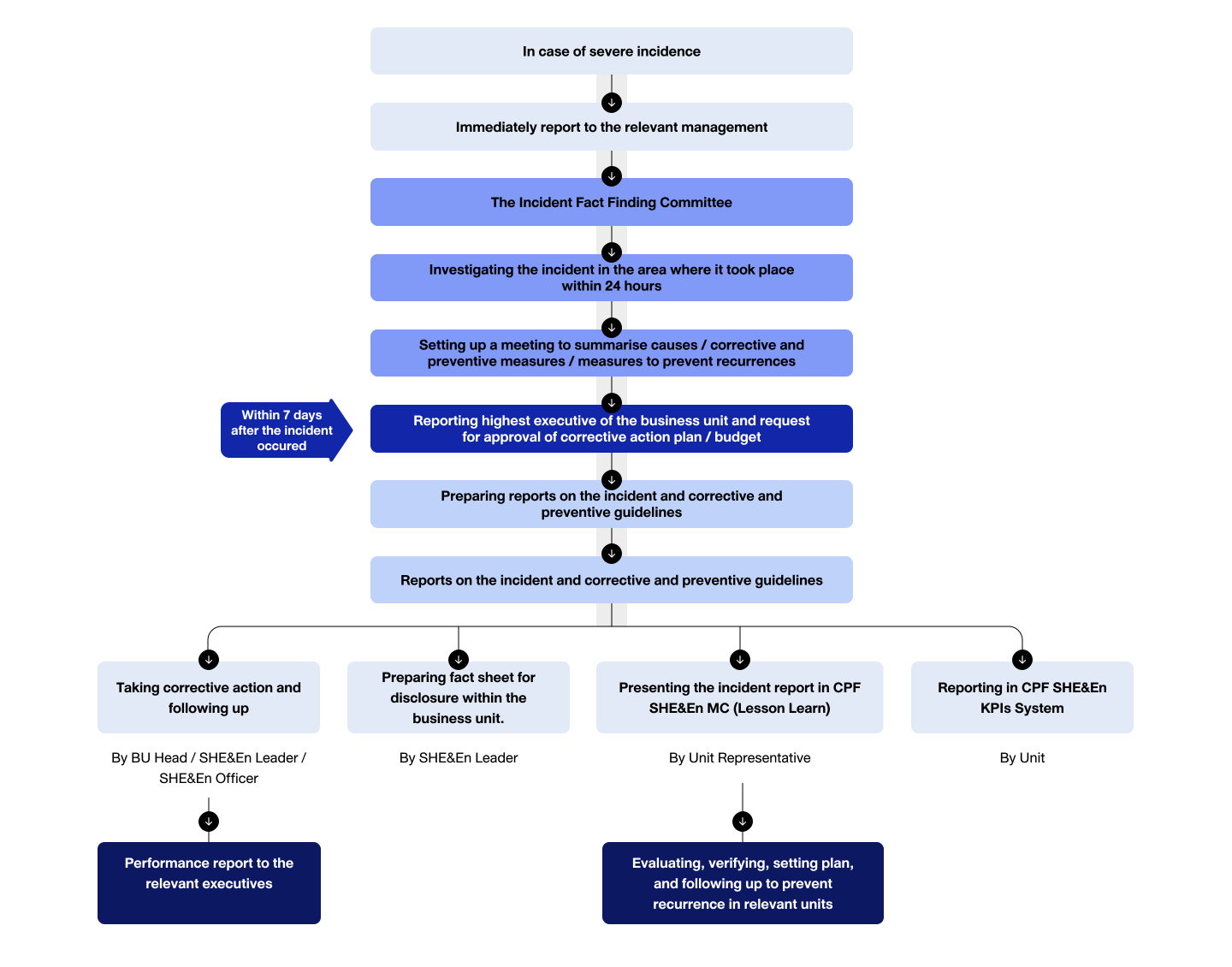
In case of an incident and a near-miss incident, including working conditions that are unsafe or non-compliance with regulations or potential of non-compliance, CPF has a reporting process and conducts fact finding, analysing, correcting, preventing and following up on remediation to prevent recurrences. However, if there is a serious incident regarding occupational health and safety that affects at least a matter that causes
CPF has set the following procedures:
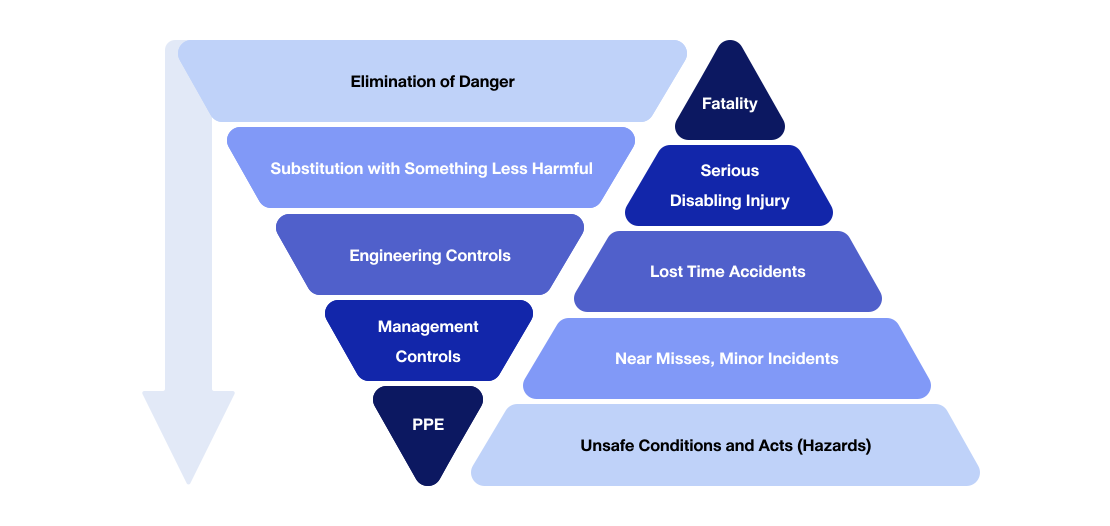
The Company’s Safety Modular and Safety Kaizen activities identify risks from unsafe environments and implement measures to prevent hazards, reducing risks to acceptable levels. This involves using an integrated multi-faceted approach to risk management, including the elimination of existing hazards by using lower-risk materials and engineering improvements to address potential causes of accidents at the source.
Pre-project job hazard analyses help to control potential workplace hazards, reduce risk-causing behaviors, and create a culture of safety (Behavior-based Safety).
Occupational Health
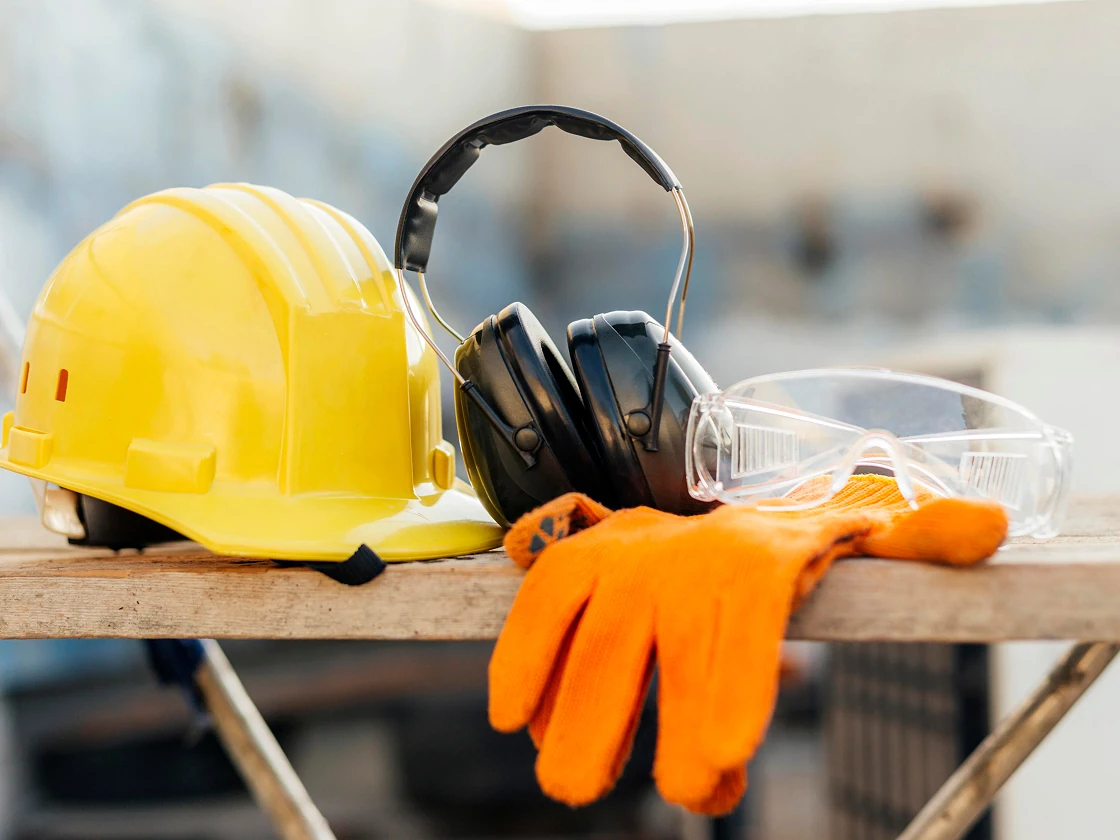
CPF has conducted health risk assessment and established preventive and control measures on workplace hazards that may affect health, using an engineering control system or other management systems to reduce employees' exposure to hazards during work, namely:





Enhancing Employee Potential on Occupational Health and Safety
CPF has established criteria for requirements identification and created the Occupational Health and Safety Training Matrix for employees and contractors, suitable with their job positions or high risk activities or for the types of work that must be performed in order to enhance knowledge, competence and understanding on potential hazards and accidents, and to provide methods for preventing and controlling workplace hazards to ensure safety performance. Examples of the training courses include courses in the new employee orientation on safety, occupational health, and environment; building safety, occupational health, environment and energy culture at the supervisor level, the operating level, and the executive level; and 5 workplace hazards.
2025 Target
Lost Time Injury Frequency Rate (LTIFR) of Employees
Remarks:
1 Data covers Thailand, Vietnam, the Philippines, Cambodia, Malaysia, India, TÜrkiye, and Laos operations.
2 Data covers Thailand, Vietnam, the Philippines, Cambodia, Malaysia, United Kingdom, India, TÜrkiye, and Laos operations.
3 Data covers all operations with production bases globally, excluding China, and Russia.
4 Data covers all operations with production bases globally, excluding China, Russia, and Sri Lanka.
