Conservation and Ecosystem Restoration Project

Preserving natural resources, including the conservation and restoration of forests, is a crucial issue for a company such as CPF which operates an agro-industrial and food business. We work continually to improve the livelihoods of communities, while fostering a mindset for sustainable coexistence with nature.

Framework
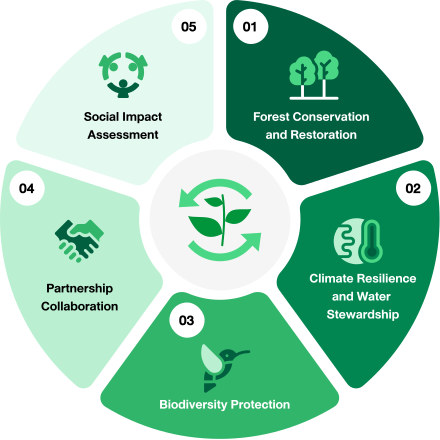
Forest Conservation and Restoration
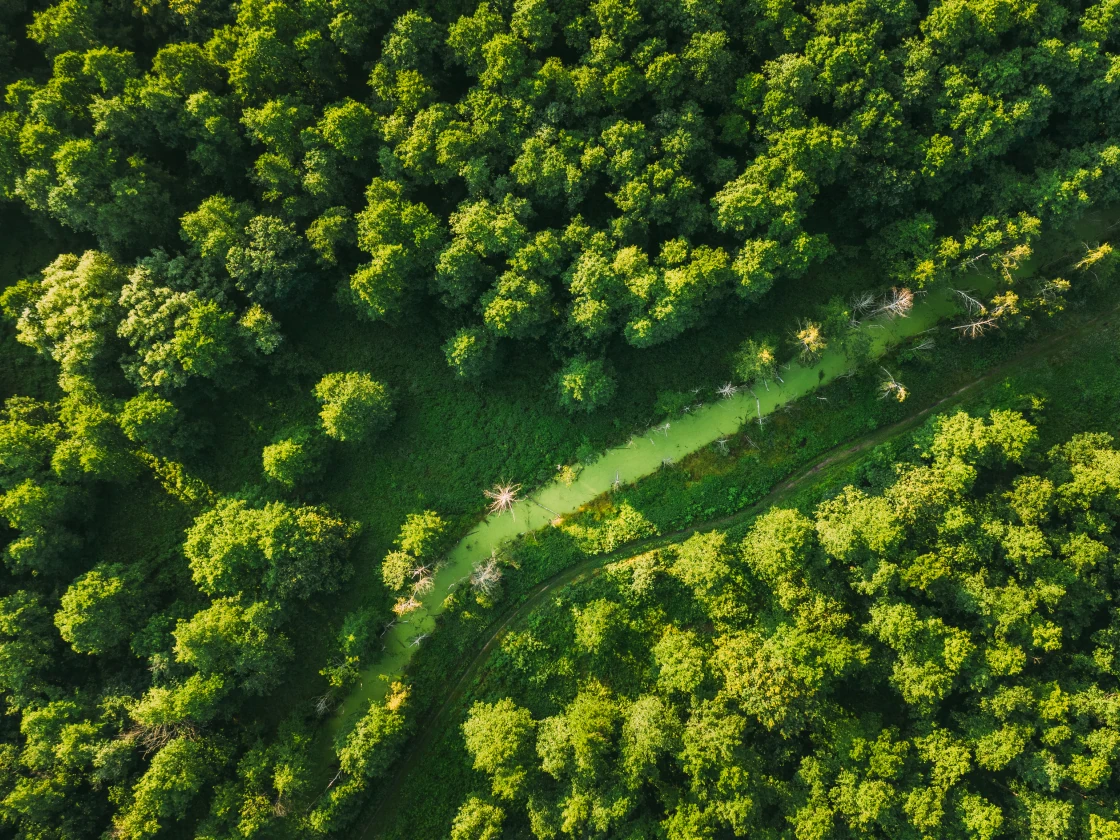
Conducting field surveys, selecting plant species, determining suitable restoration methods for each area, and establishing water resource infrastructure.
Climate Resilience and Water Stewardship
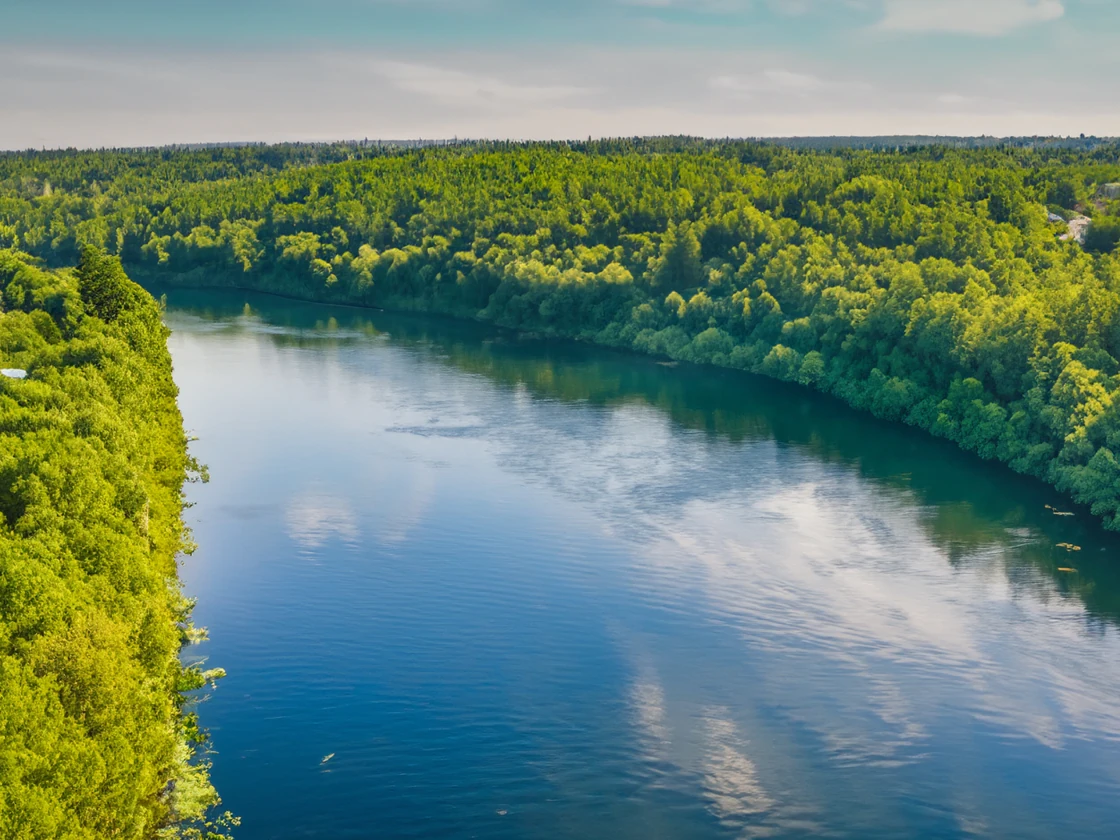
Forests are crucial carbon sinks and water retention areas. Forests are also the origins of headwaters of natural water sources for surrounding communities.
Biodiversity Protection
Study and research of ecosystem biodiversity, both terrestrial and marine, which provides indicators for the success of forest conservation and restoration, as sources of food and water, and as suitable ecosystems for various living organisms.
Partnership Collaboration
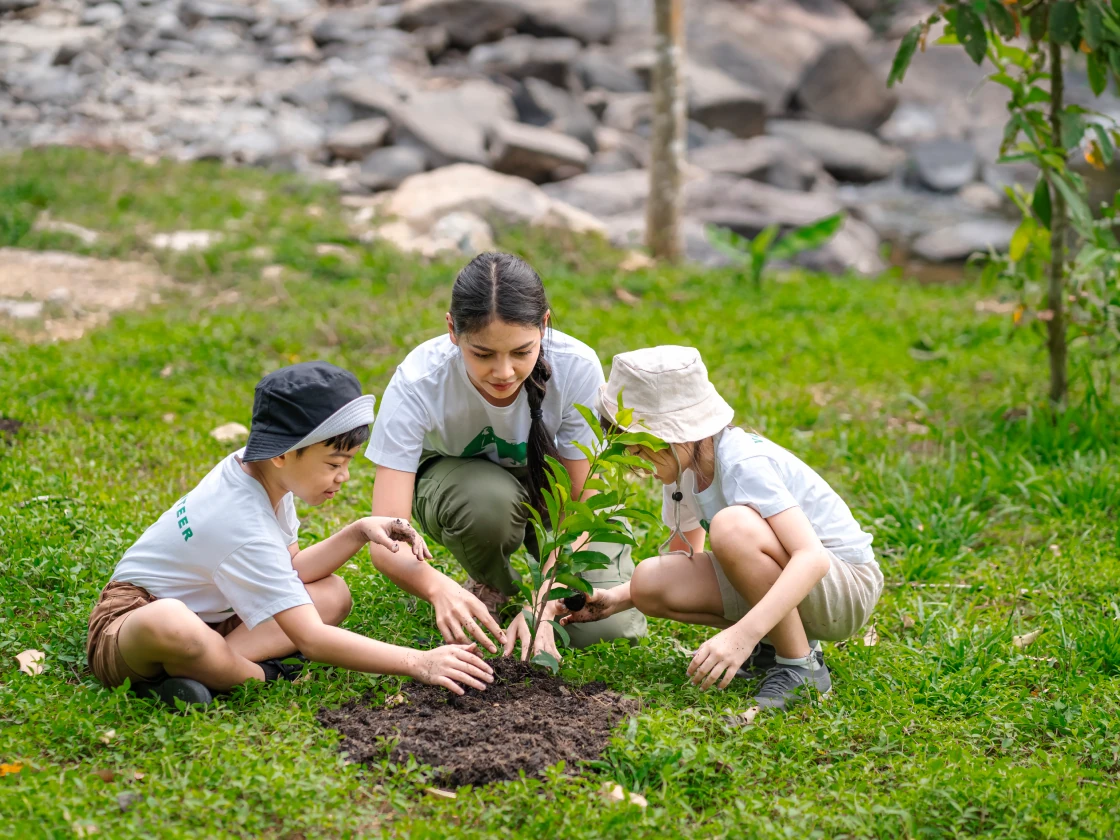
Fostering engagement with stakeholders (employees, local communities, students, civil societies, etc.) through joint activities, including tree planting, the building of check dams, the removal of invasive species, and the running of youth camps. These activities are designed to raise awareness about the importance of forest conservation to restore and maintain biodiversity. Social projects also allow communities to sustainably benefit from forests, while improving their quality of life.
Social Impact Assessment
Assessing the impact of various projects on economic, social, and environmental aspects, according to the principles of the Natural Capital Protocol and Social & Human Capital Protocol established by the World Business Council for Sustainable Development (WBCSD).

Conservation and Restoration of Terrestrial Ecosystems

CPF Ecosystem Conservation Project (Rak Ni-ves Project), Pasak Watershed, Phraya Doen Thong Mountain in Thailand
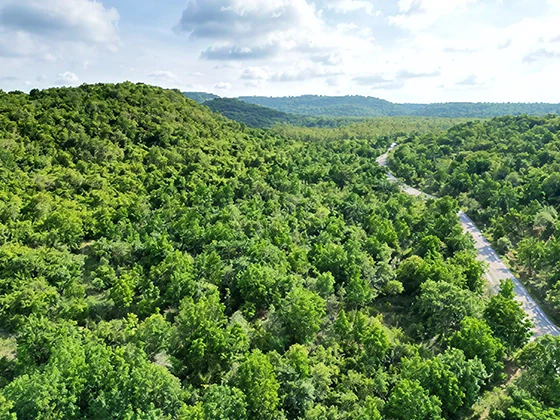
The CPF Rak Nives Project was created to effectively tackle the country's problems related to watershed forests. Since 2016, the Company has worked with the Thailand Department of Forestry and local communities in conserving and restoring the Pasak Watershed forest, covering an area of 11,971 rai (1,915 hectares). Specific reforestation methods are employed, which shorten the forest restoration period. Collaborating with the Department of Forestry, suitable planting methods for each area are determined through field surveys. Today, the Pasak Watershed forest serves as a learning center for upstream forest conservation and restoration, ecosystem and biodiversity management, and carbon sequestration. At the same time, support is also provided to local communities in farming organic vegetables and breeding freshwater fish, enhancing food security for those living in surrounding areas.
CPF Ecosystem Conservation Project (Rak Ni-ves Project), Pasak Watershed, Phraya Doen Thong Mountain in Thailand
Forest in Farm Project
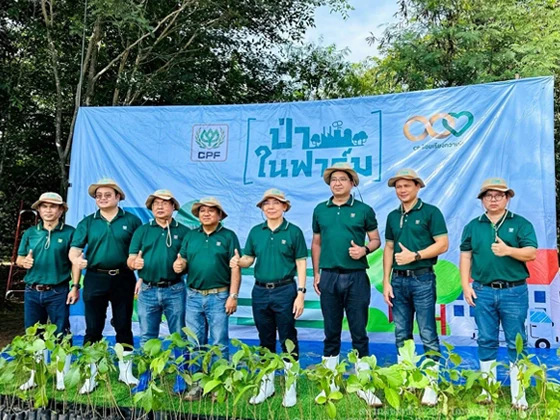
The Company has developed green belt areas through tree planting across farm and factory sites. Site surveys were conducted to identify areas with high potential for planting and to map existing trees that can be enhanced to increase their value. The initiative was launched at the model farm, Ban That Farm in Saraburi Province, and registered for carbon credit certification under the Thailand Voluntary Emission Reduction Program (T-VER) administered by the Thailand Greenhouse Gas Management Organization (TGO). The Company will extend this initiative to additional farms and factories, guided by four structured approaches that provide a blueprint for creating green spaces and maximizing tree value.
Forest in Farm Project
Forest in the City Project
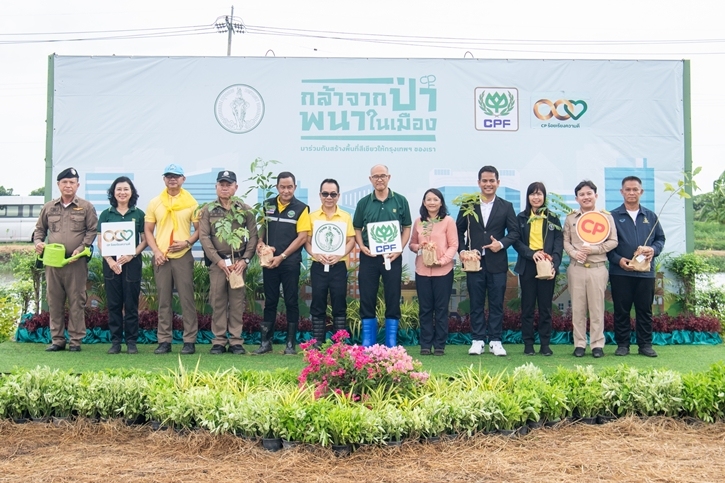
The Company, together with the Nong Chok District Office in Bangkok, transformed unused land into a new green space and learning center called “Smart Forest – A Must-See.” The site is divided into four themed zones.
Forest in the City Project
C.P. Vietnam – Journey for a Green Vietnam Project

Since 2021, the Company’s operations in Vietnam have actively supported the National Greening Program to contribute to ecosystem restoration. This initiative aims to expand green spaces within factories and farms, mitigate coastal erosion, prevent landslides in areas affected by storms and floods, and enhance biodiversity to protect the ecosystem.

The project established an ambitious goal to plant 1.5 million trees by 2025, comprising 500,000 trees within operational sites and 1 million off-site trees dedicated to the community. Planting activities encompass mangrove forests, terrestrial forests, and community forests. This initiative is carried out in close collaboration with local government authorities, the Forest Protection Department, Forest Conservation Centers, and the International Union for Conservation of Nature (IUCN).
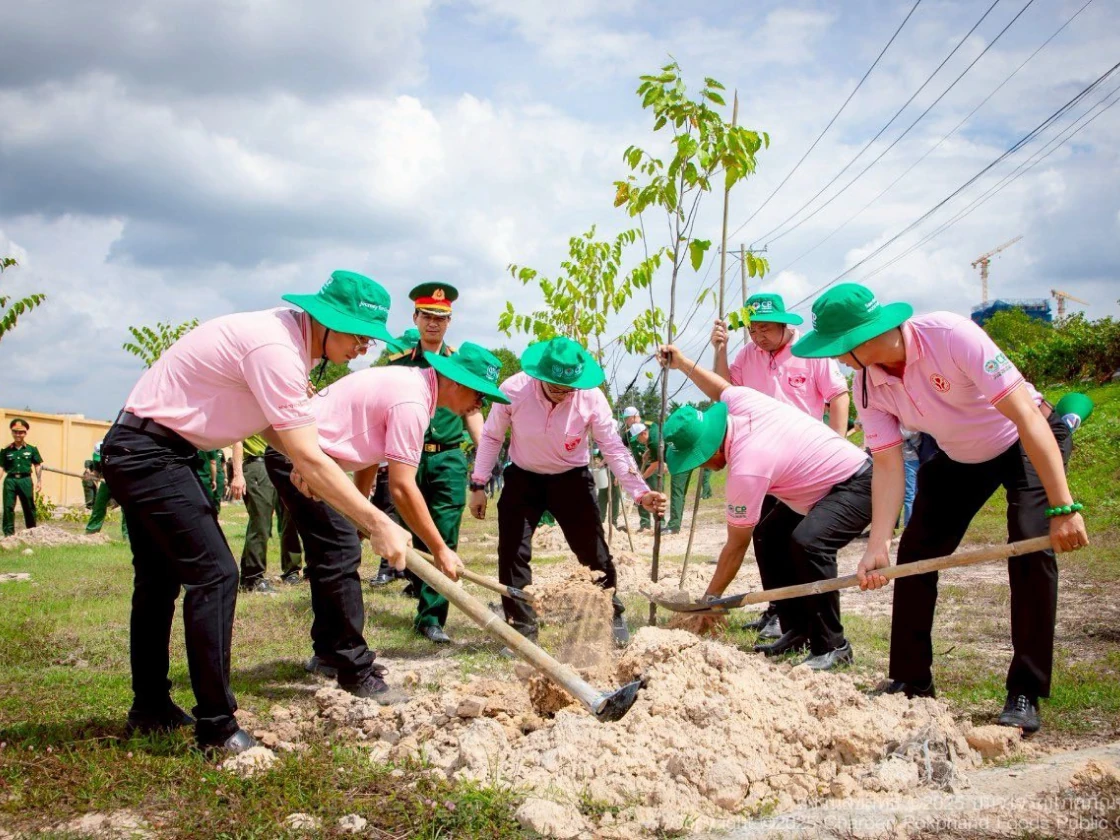
C.P. Vietnam – Journey for a Green Vietnam Project

Conservation and Restoration of Freshwater Ecosystems

CPF recognizes that access to safe and reliable water is a fundamental local community right. In addition to monitoring the quality of water discharged from its factories and farms to help safeguard local water resources, the Company proactively engages with communities through surveys and feedback channels. It also conducts routine monitoring of community water use, water availability, and water quality to understand local needs and potential concerns.

"Love the Mun River" Project: Mission to Restore Ecosystems
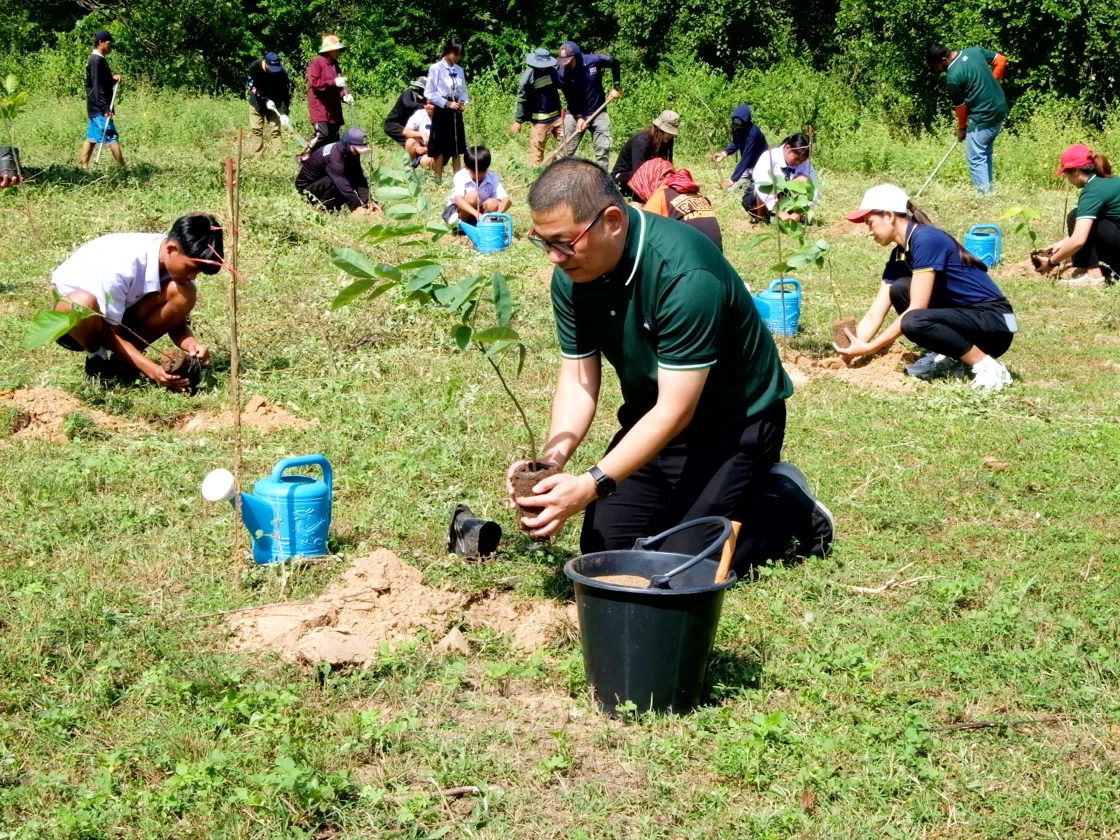
The Mun River is the primary river in northeastern Thailand, flowing through several provinces and providing an important source of water for drinking, household use, and agriculture. Because the river’s watershed also passes through areas where the Company operates, the Company has worked with government agencies and local communities to carry out Mun River conservation activities on an ongoing basis since 2018.
"Love the Mun River" Project: Mission to Restore Ecosystems
Sustainable Community Water Management Project
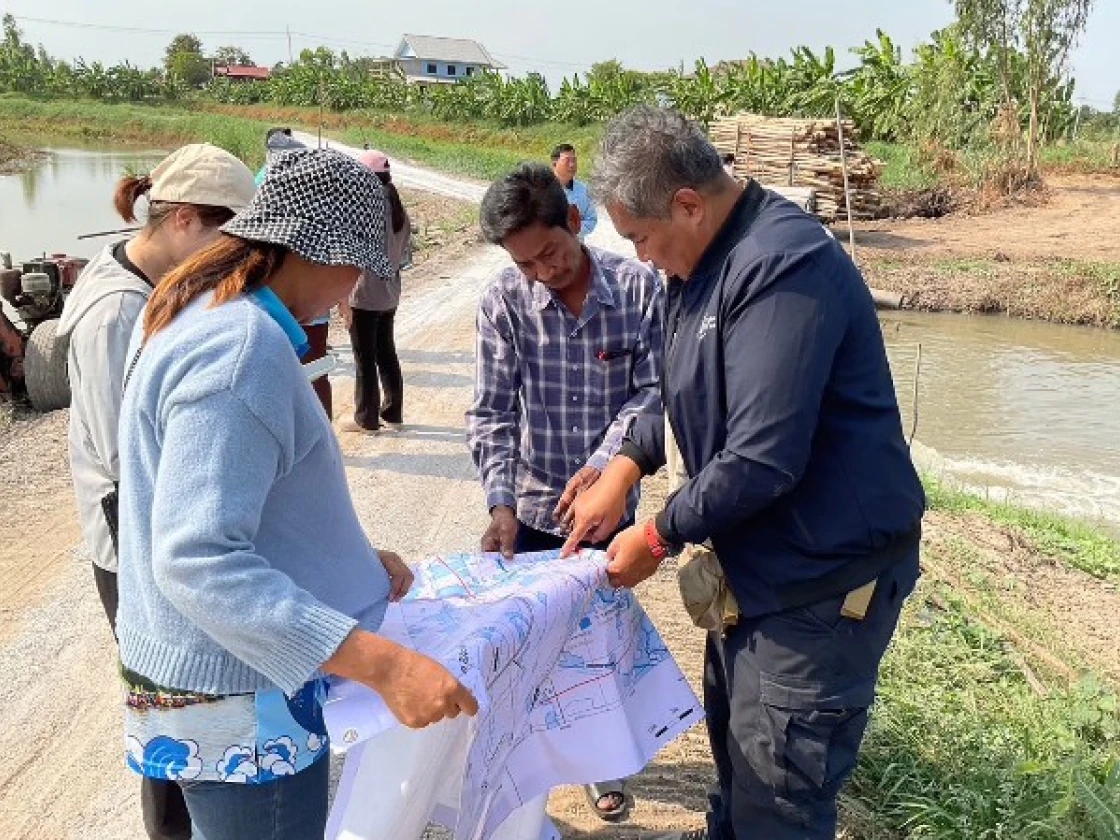
The Company recognizes that communities near its key operational areas need reliable access to sufficient, good-quality water. In 2024, the Company partnered with the Hydro-Informatics Institute (HII) to support and strengthen community water management in Tha Yiam community, Nakhon Ratchasima Province, based on the initiative of His Majesty King Bhumibol Adulyadej the Great (Rama IX). This collaboration is intended to build long-term, sustainable water security for the community.
Sustainable Community Water Management Project

Conservation and Restoration of Marine and Coastal Ecosystems

CPF Grow-Share-Protect Mangrove Project
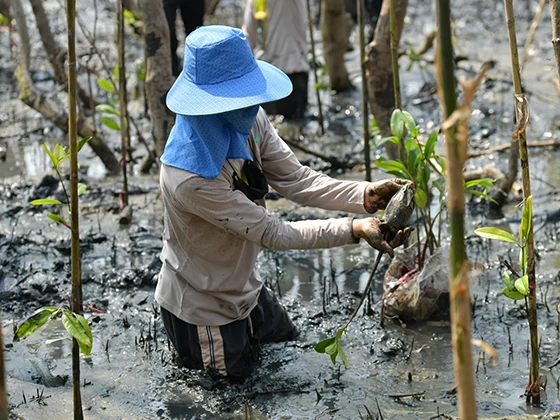
Since 2014, in collaboration with local government agencies and communities, our Thailand operations has conserved and restored mangrove forests in Samut Sakhon, Rayong, and Trat provinces, covering a total area of over 2,700 rai (432 hectares). Crucial for nurturing aquatic animals, mangrove forests support ecosystem biodiversity and enhances food security and quality of life for local communities.
CPF Grow-Share-Protect Mangrove Project
Plant Today, Reap Tomorrow Project – Philippines
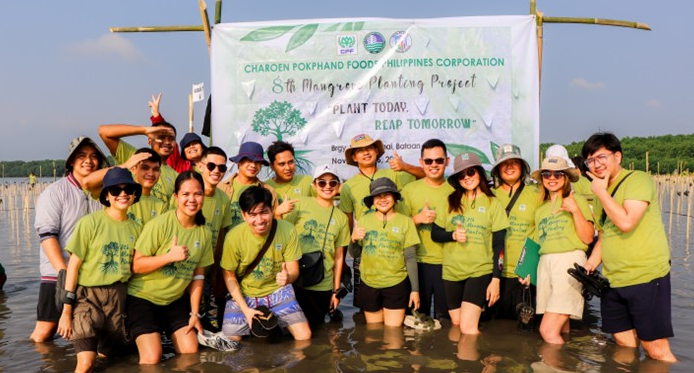
Coastal areas in Samal, Bataan Province—specifically in Calaguiman and Sapa barangays—face high risks from natural disasters and coastal erosion due to climate change and the decline of mangrove cover. Over the past decade, from 2014 to the present, the Company has undertaken ecosystem restoration efforts by planting over 61,200 mangrove trees, covering an area of 8.3 hectares. This initiative aims to rehabilitate degraded lands, establish nature-based solutions as natural barriers against floods and storm surges, and support sustainable livelihoods for local communities. The project has fostered engagement with communities, schools, local government units (LGUs), and government agencies, involving over 3,200 participants.
Plant Today, Reap Tomorrow Project – Philippines
Trap the Sea Trash Project
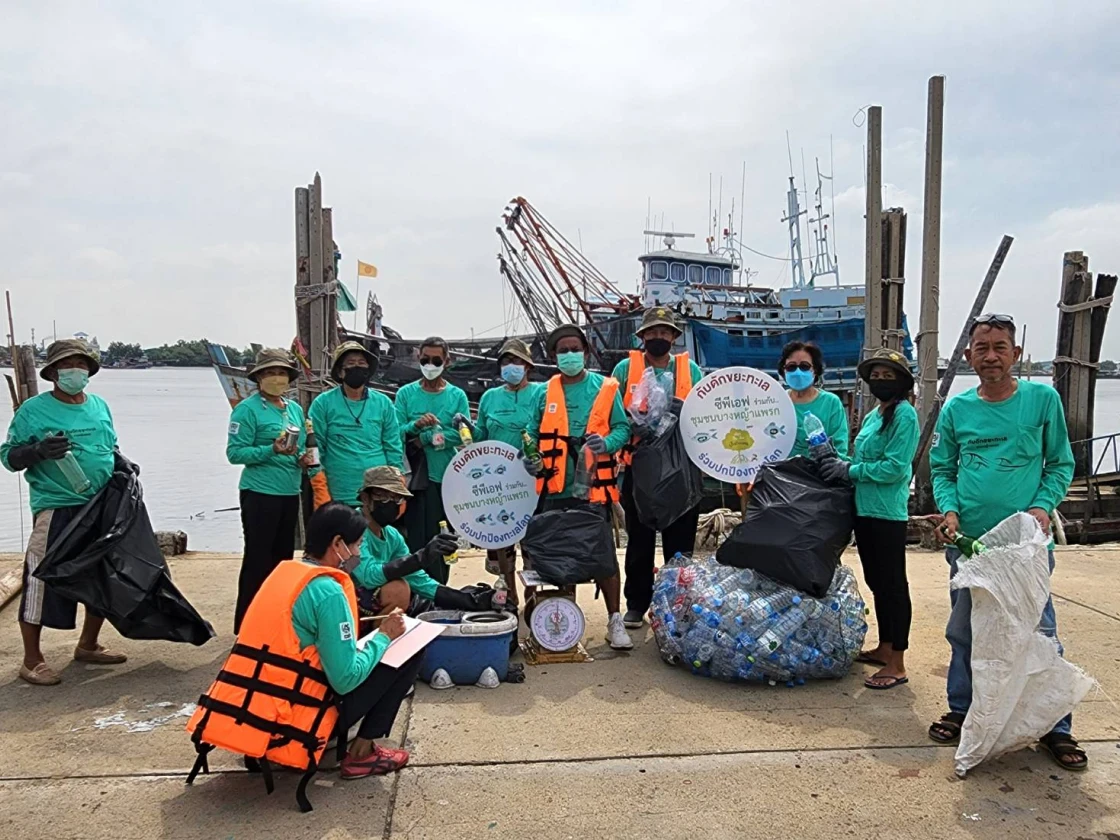
Our Thailand operations partnered with the Bang Ya Phraek community in Samut Sakhon Province to reduce littering and strengthen waste collection, sorting, and management based on the 3Rs (Reduce, Reuse, Recycle). The initiative focuses on collecting waste, sorting it properly, and managing it using the 3Rs—Reduce, Reuse, and Recycle. This effort has also helped decrease the amount of waste in local canals.
Trap the Sea Trash Project
Coastal Cleanup Project
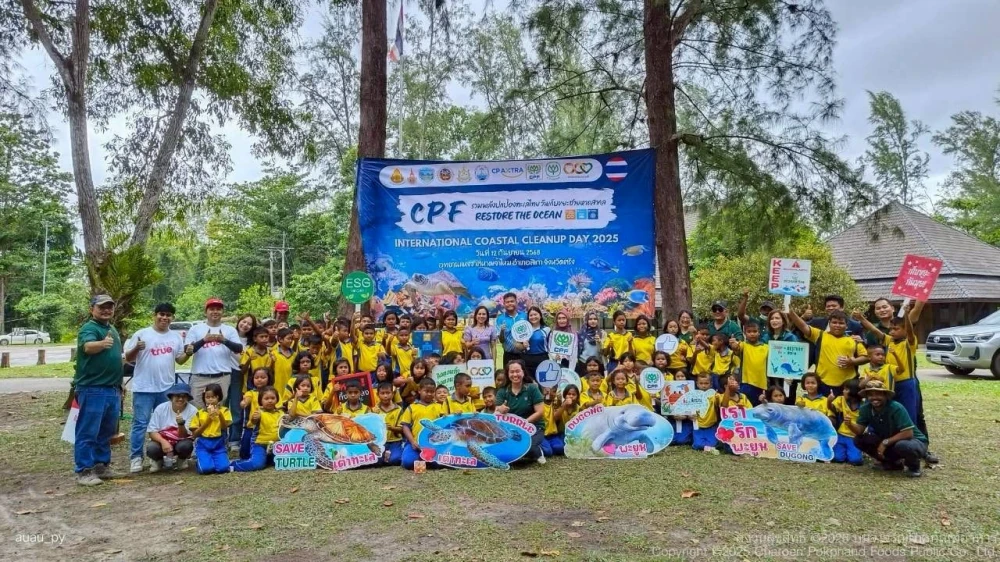
The Company's operations in Thailand and Vietnam collaborate with local government agencies, communities surrounding operational sites, civil society organizations, and other partners to raise awareness and promote employee and community engagement in marine environmental protection. This is achieved through joint waste collection activities along beaches and mangrove forests on International Coastal Cleanup Day (the 3rd Saturday of September), an initiative organized annually.
Coastal Cleanup Project

Conservation of Species (Flora or Fauna)

Sarus Crane Conservation and Development Project

The Company’s operations in Vietnam are working with the Zoological Park Organization of Thailand (ZPOT) and the People’s Committee of Dong Thap Province to carry out the “Sarus Crane Conservation and Development Project.” This project follows a 10-year plan (2022–2032) at Tram Chim National Park in Dong Thap Province to help restore biodiversity in the region.

The Eastern Sarus Crane is listed as Vulnerable (VU) on the IUCN Red List. The project aims to bring the cranes back to their natural habitat, restore the surrounding environment, rebalance the ecosystem, and establish long-term, sustainable conservation practices.
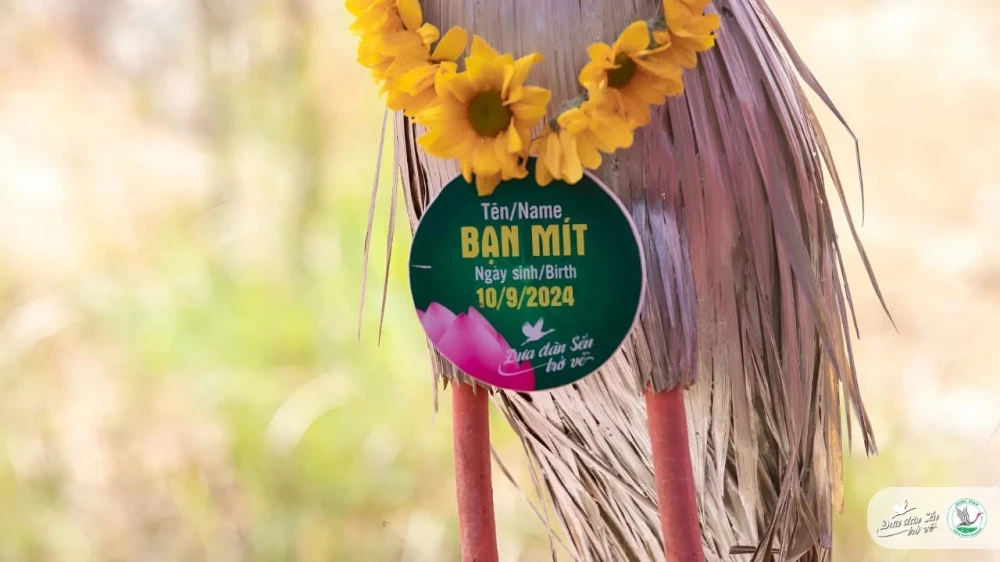
Sarus Crane Conservation and Development Project

Outcomes of Forest Conservation, Protection, and Restoration (Terrestrial and Mangrove) and Green Space Expansion On-site and Off-site.

The total number of tree

trees
Turkiye
trees planted
Russia
trees planted
Vietnam
trees planted
Philippines
trees planted
India
trees planted
Malaysia
trees planted
Laos
trees planted
Thailand
trees planted
Cambodia
trees planted