Water Risk Assessment
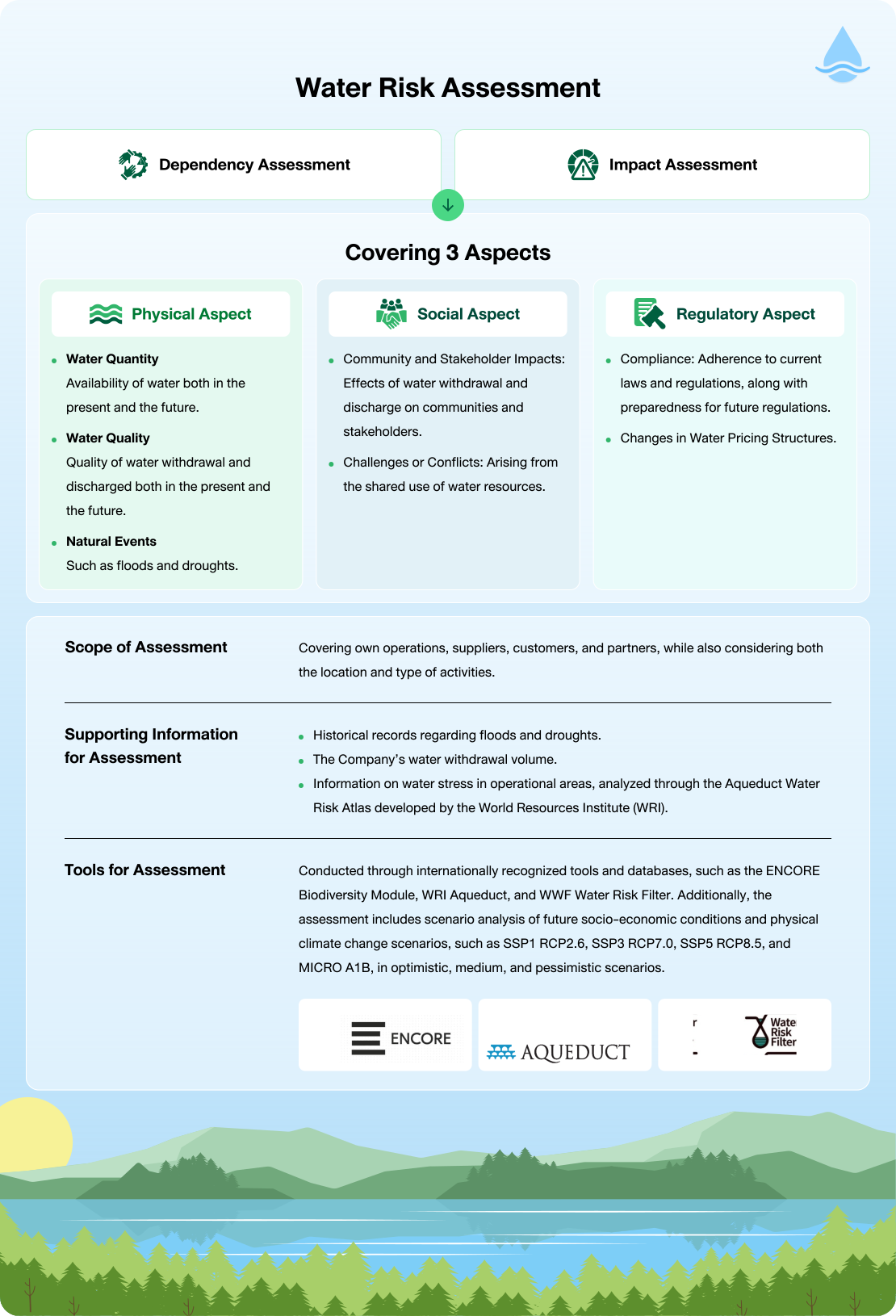
The Company recognizes the need for effective and flexible water resource management. To support this, it regularly assesses water-related risks across its entire value chain, including risks associated with water dependency and potential impacts—such as physical risks (e.g., droughts and floods), social risks (e.g., community water needs), and regulatory risks (e.g., changes in water laws and requirements). For new operational sites, the Company also reviews historical flood and drought data to inform decisions on whether to build, lease, or acquire facilities in a given location.
Water Risk Assessment
Results of Water Risk Assessment
Impacts and Dependencies throughout the Value Chain
| Activities of Suppliers | Activities of CPF | |||||
|---|---|---|---|---|---|---|
| Feed Raw Material | Feed | Swine Farming | Poultry Farming | Aquaculture | Food Processing | |
| Dependencies | ||||||
| Water Supply | ||||||
| Water Purification | ||||||
| Impacts from Business Activities | ||||||
| Water Consumption | ||||||
| Water Pollution | ||||||
Remark : Based on the ENCORE database and the nature of the business activities.
Exposure to Water Stress
% Operational sites at high risk of water stress
The assessment evaluates the volume of freshwater withdrawals from the Company’s operations in conjunction with Baseline Water Stress data sourced from the Aqueduct Water Risk Atlas (as of February 2026) to identify the risk levels of operational sites. Consequently, operational sites across different business groups and countries are subject to varying degrees of water risk management measures and target setting.
Remark : The assessment scope covers 92% of the total operational sites, excluding data from operations in China, Russia, and Sri Lanka.
Future Security of Water Resources for High-Risk Operational Sites
| Scenario | Current-2025 | Future-2030 | Future-2050 | ||||
|---|---|---|---|---|---|---|---|
| Optimistic | BAU | Pessimistic | Optimistic | BAU | Pessimistic | ||
| Water Quantity | 8% | 28% | 33% | 43% | 29% | 31% | 42% |
| Water Quality | 12% | 14% | 16% | 17% | 22% | 30% | 35% |
| Local Conflict | 8% | 42% | 42% | 42% | 42% | 42% | 42% |
| Changes in Regulations | 0% | 0% | 10% | 89% | 0% | 94% | 99% |
Remark :
Based on the WWF Water Risk Filter, the analysis considers the following scenarios: the Optimistic Scenario is derived from RCP 2.6-4.5 & SSP1; the Business-as-Usual (BAU) Scenario is derived from RCP 4.5-6.0 & SSP2; and the Pessimistic Scenario is derived from RCP 6.0-8.5 & SSP3. The assessment scope covers 92% of total operational sites, excluding data from operations in China, Russia, and Sri Lanka.
Water Risk Management Measures for High-risk Operational Sites
Management and Planning Measures
- Developing water management and impact mitigation plans tailored to specific areas, overseen by senior management.
- Reviewing site-specific business continuity plans (BCP).
- Closely monitoring physical water-related indicators, both internally and externally.
- Frequently monitoring changes in laws, regulations, and water pricing.
Engineering Measures
- Analyzing water management systems and ensuring ongoing preventive maintenance.
- Improving or installing additional water quality enhancement systems.
- Continuously improving water efficiency and adhering to water quality standards.
Communication Measures
- Conducting community surveys and developing community engagement plans.
- Collaborating with local stakeholders on various issues.
- Educating both internal personnel and external parties on effective water management practices.
Initiatives and Highlights
El Niño-La Niña Flood and Drought Response Plan